As an Amazon Associate, we earn from qualifying purchases. Some links on this site are affiliate links at no extra cost to you. Our recommendations are based on thorough research and editorial judgment.


How To Choose RC Touring Car Motor?

Choosing the right motor for our RC touring car involves understanding key specs. First, we must decide between brushed, which are great for low-speed control, and brushless motors that often offer higher efficiency and speed. Next, consider the motor size; a longer motor provides more torque. Don’t forget the KV rating—it tells us how many RPMs we can expect per volt. Finally, we should verify our ESC can handle the motor’s peak current. Stick around to explore more tips and tricks!
Key Takeaways
- Consider the motor type: choose between brushed for torque and ease or brushless for efficiency and lower maintenance.
- Evaluate the KV rating: opt for a balance between speed and torque based on your driving style and track conditions.
- Ensure ESC compatibility: match the motor’s type and voltage with an ESC that can handle its peak current draw for reliability.
- Adjust gearing ratios: select appropriate gears for the motor size to prevent overheating and enhance performance based on your vehicle’s scale.
- Factor in cooling solutions: incorporate heatsinks or active cooling methods to maintain optimal performance and prolong motor lifespan.
Understanding Motor Types: Brushless Vs Brushed
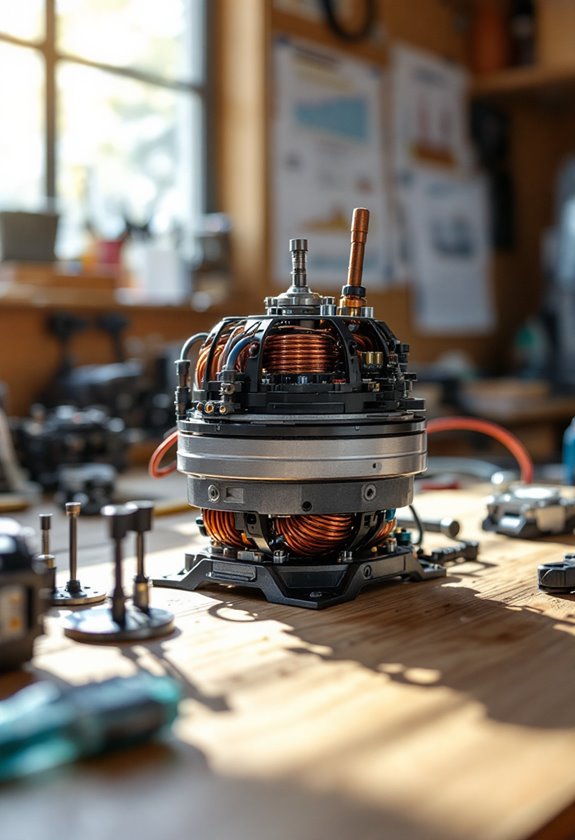
When we immerse ourselves in the world of RC touring car motors, it’s essential to understand the differences between brushed and brushless motors. Brushed motors have some advantages, particularly in low-speed control and high torque, making them great for applications like rock crawling. They’re simpler and easier to maintain, but they require regular brush replacement due to wear. On the other hand, brushless motors shine with their efficiency, reaching up to 95%. They offer higher speeds, better acceleration, and longer lifespans since there are no brushes to wear out. While they come with a higher price tag, their reduced maintenance and stellar performance often make them worth the investment for serious hobbyists. Additionally, considering the benefits of lithium polymer batteries can greatly enhance the overall performance and runtime of your RC car.
Exploring Motor Sizes and Torque Requirements

Understanding motor sizes and torque requirements is essential for optimizing our RC touring car performance. Motor length considerably affects torque output; longer motors, like the 550, deliver more torque for heavier vehicles, enhancing performance balance. Typically, diameter impacts magnetic flux and cooling, but we find that length changes yield more noticeable differences in torque.
For 1/10 scale cars, we often opt for 540 motors, while 1/8 scale vehicles usually require longer motors (up to 76mm) for effective torque management. It’s critical to evaluate vehicle compatibility, as larger diameters may affect housing fit. Finally, we must adjust gearing ratios according to specific scaling factors, ensuring our motors function efficiently while avoiding overheating during operation. Additionally, considering the performance tuning options available can further enhance the overall efficiency and speed of our RC touring cars.
Decoding KV Ratings and Speed Dynamics

Decoding KV ratings is essential for anyone diving into the specifics of RC touring car performance. The KV rating impacts our choice by indicating the motor’s RPM per volt. A higher KV means more speed but comes with a trade-off—less torque. In our selection process, we must consider speed vs. torque and how voltage influences performance. For instance, a 2000 KV motor can reach 20,000 RPM on 10 volts but may struggle with high current draw under load. While high KV motors excel in speed, they might compromise torque, leading to challenges on inclines. Testing different setups helps us balance these dynamics, ensuring we choose the right motor for our unique driving style and track conditions. Additionally, understanding adjustable suspension can greatly enhance control, allowing better handling based on motor performance.
Ensuring ESC Compatibility and Power Requirements

To guarantee our RC touring car setup runs smoothly, matching the Electronic Speed Controller (ESC) with the motor is vital. We need to start by checking the ESC specifications to confirm it’s compatible with our chosen motor type—whether it’s brushed or brushless, sensored or sensorless. Correct voltage ratings are essential; exceeding these can lead to ESC failure.
We should also consider the current handling capacity of the ESC. Higher KV or lower-turn motors draw more current, so picking an ESC rated above our motor’s peak current is wise for reliable performance. Additionally, selecting ESCs with protective features like low voltage cut-off and overheat protection will enhance the longevity and reliability of our setup. Finally, understanding power management helps us maintain efficiency and protect our components, leading to improved motor performance. Let’s stay informed and make the right choices!
Matching Power Systems and Gear Ratios

Finding the right balance between power systems and gear ratios is essential for maximizing our RC touring car’s performance. To achieve gear ratio optimization, we first consider motor KV ratings and their torque output. Higher KV motors spin fast but have less torque, needing lower gear ratios to prevent overheating. Conversely, lower KV motors produce more torque, allowing for higher speeds.
Additionally, our battery voltage impacts RPM and heat generation, demanding careful power system integration. By matching KV ratings with appropriate gear ratios, we guarantee effective acceleration and top speed while prolonging motor life. With each adjustment, we’ll find that sweet spot that enhances performance and keeps our cars in peak condition. Furthermore, understanding battery types is crucial for ensuring optimal power delivery during races. Let’s tackle this together—success is just a gear change away!
Managing Motor Cooling and Heat Dissipation
As we immerse ourselves in managing motor cooling and heat dissipation, it’s essential to remember that excessive heat can considerably hamper our RC motor’s performance and lifespan. Effective thermal management guarantees consistent power delivery under strain and can prevent permanent damage. We can use various cooling techniques:
- Passive Cooling – Heatsinks disperse heat efficiently.
- Active Cooling – Fans boost airflow for better cooling.
- Composite Cooling – Combining heatsinks and fans maximizes efficiency.
When choosing fans, we should make certain they blow cool air onto the motor and not draw hot air back. Regular cleaning, making certain of proper airflow, and replacing noisy fans are key practices. Additionally, ensuring battery life is optimized can also contribute to preventing overheating during intense usage. By following these tips, we enhance our motor’s reliability, keeping our rides smooth and enjoyable.
Factors Influencing Motor Durability and Longevity
When we consider the factors influencing motor durability and longevity, a few key aspects come to mind that can greatly impact our RC motor’s lifespan. First, choosing between brushed and brushless motors is vital; brushless motors typically last longer due to no brush wear. Next, we should follow voltage guidelines rigorously—operating above the rated voltage causes rapid overheating, leading to failure. Additionally, proper motor maintenance, like cleaning and lubrication, helps keep our motors in top shape. It’s also important to match gearing to motor specifications, as over-gearing puts unnecessary stress on components. Finally, using high-quality materials in our motor’s construction can enhance its resilience against wear and heat, ultimately leading to a longer-lasting performance in our RC experience.
Tailoring Motor Selection to Driving Style and Terrain
Tailoring our motor selection to both driving style and terrain can greatly enhance our RC experience. For track racing, motors in the 4500-6500 kV range excel on smooth surfaces, pushing us to maximum speed. Conversely, if we’re tackling off-road trails, lower kV motors provide essential torque for better control on rough terrain. Larger motors deliver more torque, making them ideal for heavy vehicles, while lighter cars benefit from smaller, high-speed motors. It’s vital to make sure our ESC is compatible and rated above the motor’s current draw to avoid overheating. Gearing also matters: higher kV motors favor lower gearing, while lower kV motors can handle higher ratios for top speed. In the end, understanding driving conditions and motor specs is key!
Frequently Asked Questions
What Brands Are Best for RC Touring Car Motors?
When we consider the best brands for RC touring car motors, we recommend Traxxas for durability, Tekin for innovation, and Castle Creations for performance. Let’s prioritize motor compatibility and trainee recommendations for an unbeatable experience together!
How Do I Maintain My RC Motor?
To maintain our RC motor, let’s prioritize regular motor cleaning to prevent overheating issues. We should inspect parts frequently, lubricate wisely, and keep an eye on temperature for better performance and longevity. Let’s do this together!
What’s the Lifespan of a Brushless Motor?
Our brushless motors can shine bright for over 10,000 hours with proper care, showcasing their incredible lifespan. Embracing brushless advantages, we can enjoy smoother rides and lasting friendships on our RC journeys together.
Can I Upgrade My Motor Later?
Yes, we can upgrade our motor later! We just need to guarantee motor compatibility and explore our upgrade options carefully. Picking the right components enhances our performance and keeps our builds exciting and competitive together!
How Does Weight Affect Motor Performance?
Weight considerably affects motor performance; we must consider weight distribution for ideal motor efficiency. Balancing weight helps our cars accelerate better and improves maneuverability, so our driving experience is more enjoyable and responsive on the track.