As an Amazon Associate, we earn from qualifying purchases. Some links on this site are affiliate links at no extra cost to you. Our recommendations are based on thorough research and editorial judgment.

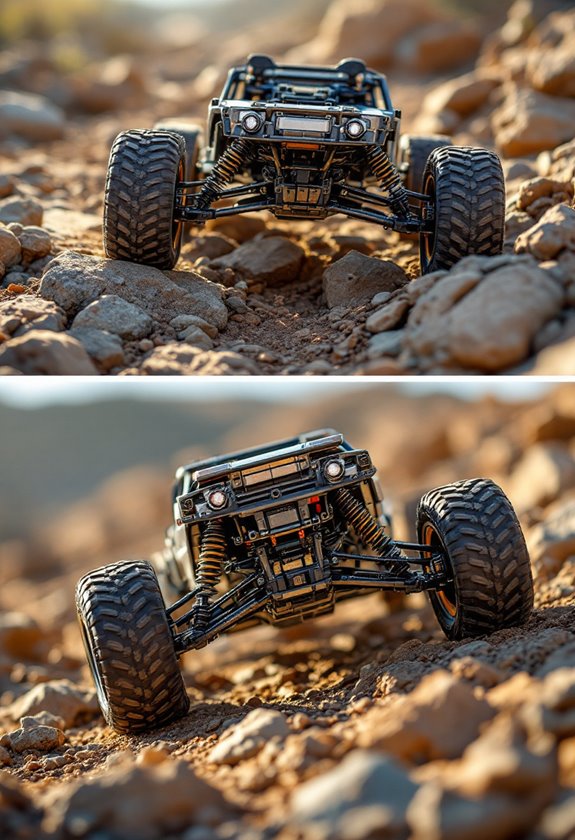
How To Balance RC Crawler Car Weight?

To balance our RC crawler car weight, we should target a 60/40 front-to-rear ratio. This distribution helps with stability and performance on diverse terrains. We can measure balance using corner weight scales or even a household scale. Adding weight strategically, like using brass weights or adjusting battery placement, optimizes handling. It’s essential to maintain a low center of gravity for better climbing. If we apply these principles, we’ll see improved performance, and there’s more to explore!
Key Takeaways
- Aim for a 60/40 front-to-rear weight distribution to enhance stability and climbing performance for your RC crawler.
- Measure corner weights using scales for a precise understanding of your crawler’s balance and adjust accordingly.
- Use weights such as brass or metal for additional stability at the wheels and axles, maintaining overall balance.
- Adjust battery placement to achieve an ideal center of gravity, which improves climbing and reduces rollover risk.
- Regularly test and fine-tune weight distribution after upgrades or repairs to ensure optimal performance on different terrains.
Understanding Weight Distribution Ratios
When we’re diving into the concept of weight distribution ratios for our RC crawlers, it’s essential to understand how they affect performance. A popular starting point is a 60/40 ratio, meaning 60% of the weight on the front and 40% on the rear. This setup creates a weight bias, improving traction effects on the front tires, especially important for climbing. Some advanced crawlers aim for a 50/50 balance for specific goals. It’s important to remember that adding weight to the front can enhance steering control but may reduce rear traction. Also, too much rear weight might compromise front responsiveness. Testing different configurations will help us discover what works best for each unique crawler and terrain type. Additionally, understanding the impact of weight distribution ratios on performance can help optimize your crawler’s design for improved handling in various conditions.
Importance of Center of Gravity (COG)
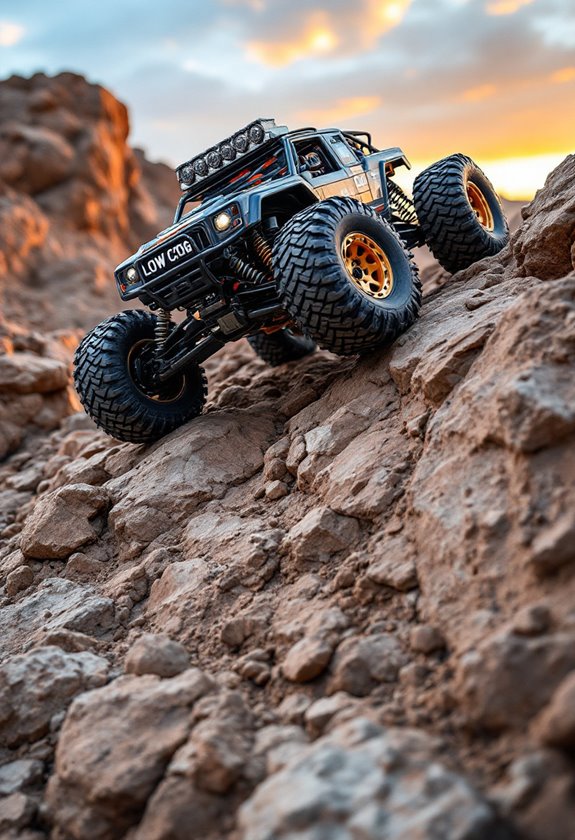
Weight distribution isn’t the only factor that affects our RC crawlers’ performance; the center of gravity (COG) plays a significant role too. The location of the COG directly influences stability. Once the COG moves outside the wheelbase, we risk tipping over. To enhance our crawling capabilities, fine-tuning COG is essential. Lowering and centering the COG can drastically improve stability, especially on climbs and side hills, where rollover risk is heightened. Using lighter batteries, like LiPo, and distributing weight laterally can further help us achieve ideal COG. Remember, maintaining a low COG not only enhances performance but also makes our ride more enjoyable. Additionally, the weight of axles can significantly impact the overall vehicle weight and handling characteristics, so selecting lightweight materials is crucial. Let’s focus on these COG effects as we tailor our setups for the best results!
Methods for Measuring Weight Balance
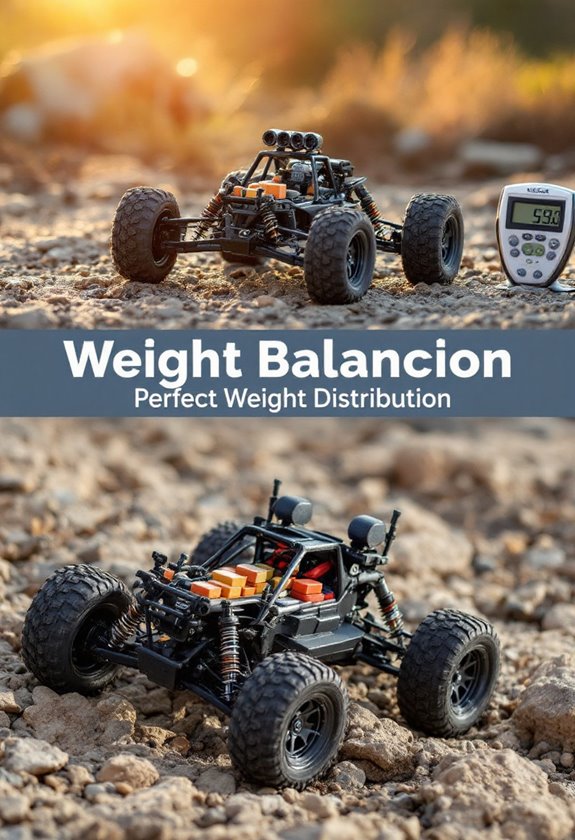
Measuring weight balance in our RC crawlers isn’t just a chore; it’s an essential step for optimizing performance. To get precise weight distribution, we can use several methods. First, we can weigh individual wheels on a precise scale to find corner weights. This gives us insight into our suspension setup. For more accuracy, corner weight scale systems paired with apps provide real-time data, allowing us to experiment with weight shimming effectively. Alternatively, we can use household scales under each tire for a rough balance assessment. After recording measurements, we can compute weight bias percentages to enhance our performance. Understanding how weight placement affects climbing ability helps us make necessary adjustments, leading to a well-balanced crawler. Additionally, utilizing a low center of gravity design can significantly improve stability during challenging climbs.
Recommended Products

Toyota Authorized 1/10 LC80: Fms 1/10 model Land Cruiser 80, uses PC blister soft shell, equipped with highly realistic dolls, exquisite instrument panel and cockpit interior, faithfully restoring the off-road performance of the original car.

【Highly Realistic Exterior and Details】: FCX10 LC80 RC Crawler, licensed by Toyota, features a PC body that replicates the real Land Cruiser 80. Exterior details, including the wipers, door handles, and roof rack, are crafted with precision in this model car. The interior components are also highly detailed, like the dashboard, gear shifter, and seat texture decals carefully designed. These realistic details offer a dual experience of visual appeal and emotional connection for this 1/10 rc car.

Strong SCX10 III steel C-channel chassis
Types of Additional Weights and Their Placement
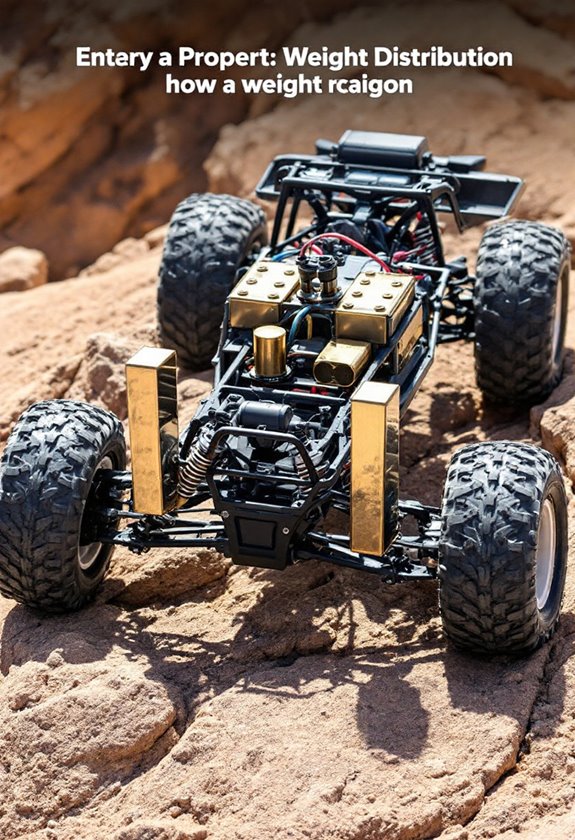
Optimizing our RC crawler car’s performance often involves strategically adding different types of weights, which can enhance stability and traction on various terrains. Common weight material types include brass weights for their density, rubber tire wraps for increased traction, and metal wheels to lower the center of gravity. We can use weight adjustment methods like placing additional weight in a 60/40 front-to-rear ratio to improve climbing ability while ensuring we’re balancing side-to-side. Adding weight to the wheels and axles maximizes ground contact, while internal chassis weights help maintain balance. Careful placement is essential; keeping weight low reduces the risk of rollovers and enhances control, allowing us to confidently tackle challenging terrains. Incorporating a high-quality aluminum alloy can further enhance the durability and performance of the RC crawler.
Recommended Products

Aluminum Metal 6x6 RC Car Chassis Frame for Axial SCX10 1/10 RC Crawler Car

Product name : SCX10 6x6 Chassis Metal frame

Wheelbase: 330mm / 12.99in, Total Length:460mm, Total Width:250mm, Total Height:180mm,Weight:1.7kg
Impact of Weight on Performance Dynamics
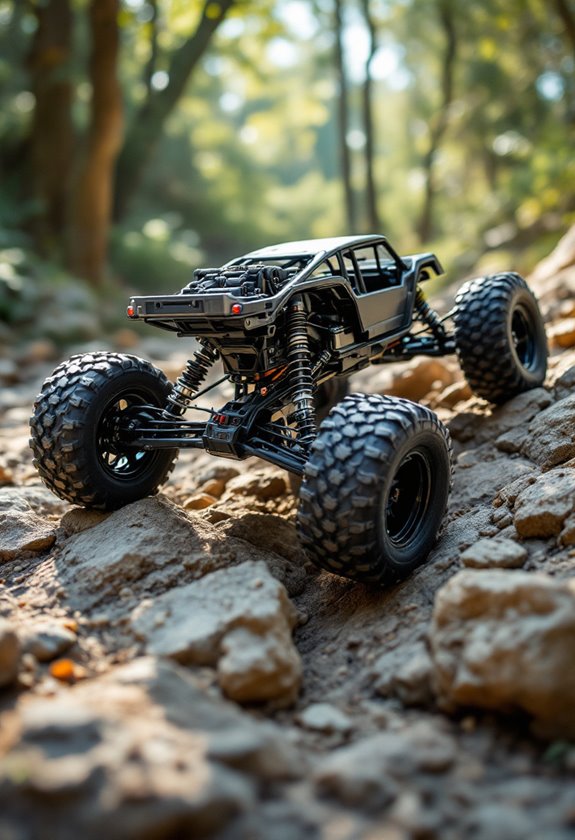
While we might think of weight as just a number, it plays an essential role in how our RC crawler performs. Weight impacts traction, stability, and overall performance optimization. A typical 60/40 front-to-rear weight distribution is key for balanced control; it enhances forward bite during climbs. If we’re rear-heavy, our crawler risks dragging backward or tipping. The center of gravity is vital; keeping weight low stabilizes the vehicle and reduces rollover risk. However, too much weight can compromise handling. When we adjust weight, we must remember that increased mass adds stress to the drivetrain. Optimizing our weight setup can lead to better acceleration and smoother descents—so, let’s find that sweet balance for peak performance!
Practical Tuning Tips for Weight Adjustment
When we think about tuning our RC crawler’s weight, it’s vital to remember that even small adjustments can lead to significant improvements in performance. For effective weight optimization, we can start by redistributing components like the battery, which helps balance our front-to-rear weight. Adding small weights in lower chassis holes enhances stability without raising the center of gravity. It’s important to avoid excessive weight on wheels; too much can negatively affect our handling characteristics during acceleration and braking. Additionally, we should retest our adjustments incrementally to avoid overcorrection. Using tools like SKYRC Corner Weight Scales helps us measure weight on each wheel precisely, ensuring we maintain symmetry for better grip and agility on various terrains. Furthermore, incorporating aggressive tread tires can enhance traction and stability on uneven surfaces, complementing our weight tuning efforts.
Recommended Products

The easiest, most convenient way to build a scale crawler for competition, with numerous innovations never before offered in a single comp-ready kit.

Strong, adjustable SCX10 III steel C-channel chassis

Wide Compatibility: Designed for 1/10 scale RC crawlers with a 313mm wheelbase, this chassis kit is compatible with popular models such as Axial SCX10, TRX4, D90, and more
Common Configuration Examples
Understanding the common configuration examples for RC crawlers can really help us fine-tune our setups for peak performance. We often see different weight balancing strategies that maximize our crawler’s capabilities. For instance, a 60/40 front-heavy configuration enhances front traction, improving climbing ability. Adding brass weights or wraps to the front wheels boosts grip considerably. On the other hand, focusing on a low center of gravity by positioning the battery low can enhance stability, albeit at the cost of clearance. A balanced 50/50 weight distribution can also benefit overall handling while requiring specific tuning. Additionally, choosing motors with higher torque at lower RPMs can significantly impact the crawler’s ability to navigate steep trails effectively. No matter which common configuration we choose, it’s essential to analyze how each affects our crawler’s agility and performance on different terrains.
Recommended Products

Efficient VFD Transmission: Lightweight Spec

Rhino Capra Metal Complete Front Rear Portal Axle Set

PREMIUM DESIGN: 1/18 scale brushless electric rock crawler with carbon fiber LCG chassis, featuring a motor-forward configuration and angled skidplate for optimal weight distribution and stability.
Regular Maintenance and Recalibration Strategies
Regular maintenance and recalibration are essential to keep our RC crawler performing at its best. We should establish a consistent maintenance frequency, inspecting and cleaning weighted components like axles and wheels to prevent dirt buildup. Using effective cleaning techniques, we can remove debris trapped in tires that might shift the balance.
Recalibrating weight distribution involves using corner weight scales or balancing pins to achieve a 60/40 front/rear bias for better traction. After each adjustment, we must test our crawler’s performance on varied terrains to guarantee stability. Monitoring drivetrain components and adjusting suspension systems contribute to maintaining our vehicle’s handling. By regularly checking these elements, we can preserve balance, avoid rolling, and enhance crawling efficiency together!
Frequently Asked Questions
Recommended Products

4x4 1/16 HG RC Off-road Vehicles Electric Crawler Car FJ40

Officially Licensed 1987 Toyota SR5 Xtra Cab Body: Axial's first 1/10-scale Toyota featuring authentic scale details including molded grille, headlights, taillights, and hood latches
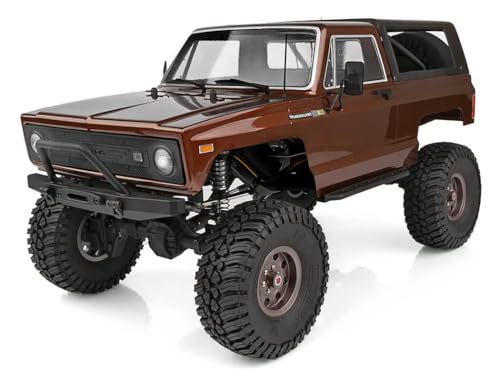
Element RC 40131 - Enduro Trailwalker Portal Plus 1/10 4X4 Crawler RTR
How Does Weight Affect Battery Life in RC Crawlers?
Weight can be our enemy when it comes to battery life in RC crawlers; ironically, we often add weight for traction. Prioritizing battery optimization and weight reduction keeps us crawling longer and enjoying the thrill together.
Can I Use Household Items as Weights for My Crawler?
Absolutely, we can use household items for our crawler’s weight! DIY weight options like coins or washers offer creative weight solutions, letting us tune performance while keeping costs low and having fun experimenting together.
What Tools Are Recommended for Weight Adjustment Measurements?
For weight adjustment measurements, we recommend using weight scales for accuracy and scales calibration to guarantee precise readings. Trust us, utilizing these tools helps us achieve ideal balance and enhances our RC crawler’s performance.
How Often Should I Check My Crawler’s Weight Distribution?
We should check our crawler’s weight distribution regularly, especially after any adjustments. Consistent weight calibration guarantees performance. Let’s keep a close eye on it before rides or competitions to maintain that perfect balance we all desire.
Does Weather Impact Weight Distribution Performance?
Absolutely, weather conditions dramatically influence our crawler’s weight distribution. Ironically, a wet day can turn our careful planning into a balancing act, reminding us we’re never truly in control of nature’s whims. We’ve got to adapt.