As an Amazon Associate, we earn from qualifying purchases. Some links on this site are affiliate links at no extra cost to you. Our recommendations are based on thorough research and editorial judgment.


How To Tune RC Racing Car Suspension For Racing?

To tune our RC racing car suspension for racing, we should first adjust the rear suspension for better traction. Softer rear springs and thinner shock oil help with responsiveness. Next, we can fine-tune camber settings, aiming for a range of -0.5° to -2°. Droop and ride height are crucial too; balancing them improves grip and handling. Finally, using the right shock oil viscosity, between 350 and 600 cSt, guarantees smooth performance. Let’s explore more adjustments for superior racing outcomes!
Key Takeaways
- Adjust rear spring stiffness based on track conditions; softer springs enhance traction and absorb bumps effectively.
- Use appropriate shock oil viscosity, aiming for a range of 350–600 cSt, to balance control and responsiveness.
- Set camber between -0.5° and -2° and adjust toe settings for improved turn-in response and stability.
- Optimize ride height and droop for balanced handling, lower ride height reduces body roll while more droop improves grip.
- Regularly inspect and maintain suspension components to ensure consistent performance during races.
Understanding Suspension Basics
When we talk about tuning an RC racing car’s suspension, it’s essential to grasp the basic components that come into play. Understanding suspension types, like independent and solid axle suspension, helps us make better tuning decisions.
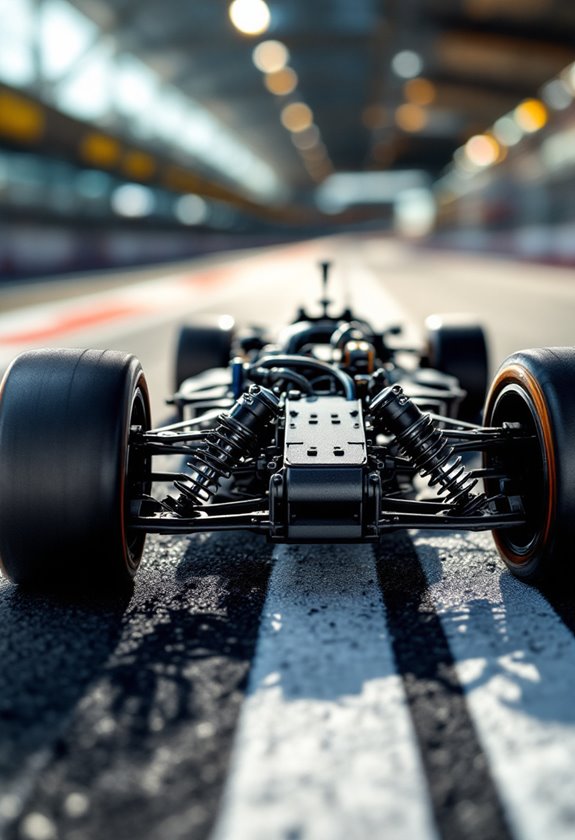
We’ve got shocks, which absorb impacts and keep tires in contact with the surface. Springs work alongside shocks, managing travel by compressing and rebounding. Suspension arms connect the wheels to the chassis, allowing for controlled movements.
Tuning techniques, like adjusting shock mounts and spring rates, can dramatically change the riding experience. By mastering these basics, we set ourselves up for success on the track, ensuring our cars handle well and maintain grip. Additionally, incorporating adjustable shock bodies into your setup can optimize vehicle handling for various racing conditions. Let’s explore deeper into these components, learning as a community!
Adjusting Rear Suspension for Optimal Traction

Tuning the rear suspension of our RC racing car is key to achieving ideal traction on the track. To enhance grip, we should focus on rear spring adjustments and shock angle modifications. Softer rear springs improve overall traction and bump absorption, while thinner shock oil allows quicker compression and rebound on rough surfaces.
For best results, balance spring stiffness with oil viscosity. If we want better lateral traction, opt for softer settings; stiffer springs paired with thicker oil may enhance straight-line speed but reduce cornering grip.
Additionally, adjusting the rear shock mounting positions can influence anti-squat and traction dynamics, helping us fine-tune how the car handles various track conditions. With these adjustments, we’re setting ourselves up for success! Moreover, upgrading to CNC-machined metal shock absorbers can significantly improve durability and performance on the track.
Recommended Products

Give your Tacoma the Perfect Blend of Performance, Protection, and Style from Rough Country.

Powerful 4x4 Off-Road Performance: The LESU 1/10 RTR 4x4 RC Model Off-Road Vehicles is designed for off-road adventures with its powerful 4-wheel drive system that can handle rough terrains and steep inclines. Whether you're climbing hills, tackling rocks, or exploring unpaved roads, this vehicle can handle it all.
Give your F-150 the Perfect Blend of Performance, Protection, and Style from Rough Country.
Fine-Tuning Camber and Toe Settings

Achieving ideal handling on an RC racing car begins with fine-tuning the camber and toe settings. We aim for a camber range of about -0.5° to -2°, starting with -1.5° as our baseline. Let’s make adjustments with the suspension compressed to avoid sidewall interference. Remember, small increments matter—shifting by just 0.5° can considerably change performance.
Next, we consider the toe angle effects. Front toe-out generally enhances turn-in response, while toe-in offers stability. Measuring toe can be done using camber measurement techniques like a carpenter’s square for accuracy. By adjusting both camber and toe symmetrically, we’ll ascertain our car handles smoothly, enhancing our overall racing experience. Upgrading tire components can also significantly improve grip during cornering, allowing for better traction and control. Let’s fine-tune and hit the track confidently!
Recommended Products


[Fitment] for Tesla Model S 2012-2022, for Tesla Model X 2016-2022
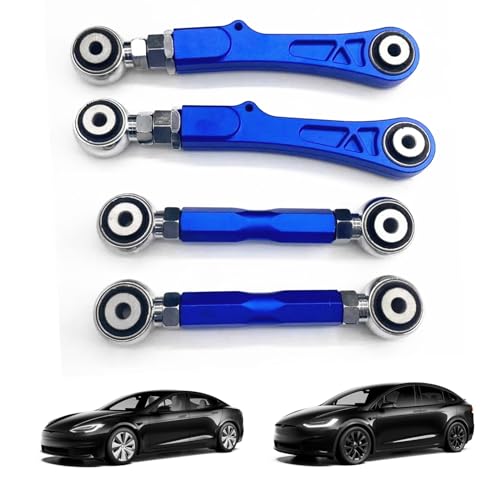
Fitment: Compatible With Tesla Model S 2012-2016; Tesla Model X 2016-
Droop and Ride Height Adjustments

Droop and ride height play essential roles in fine-tuning our RC racing car’s suspension performance. Adjusting ride height, the distance from the chassis to the ground, can greatly impact stability and steering. A lower ride height reduces body roll, enhancing response on smooth tracks, while a higher ride height allows better bump absorption on rough terrain.
On the droop side, it’s the downward suspension travel after lifting the car. More droop brings a smoother ride over obstacles, improving grip. We should aim for equal droop on both sides for balanced handling. Remember, making small, precise adjustments to both droop and ride height allows us to dial in our setup for best traction and cornering performance based on track conditions. Additionally, suspension setups can be customized for various terrains, allowing for enhanced performance and responsiveness.
Recommended Products


Lift Your 4Runner with Confidence: Adds 3 inches of lift for increased ground clearance, improved off-road capability, and a more aggressive appearance.
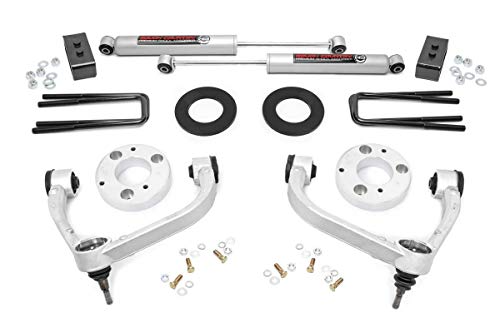
Give your F-150 the Perfect Blend of Performance, Protection, and Style from Rough Country.
Modifying Track Width and Wheel Hexes
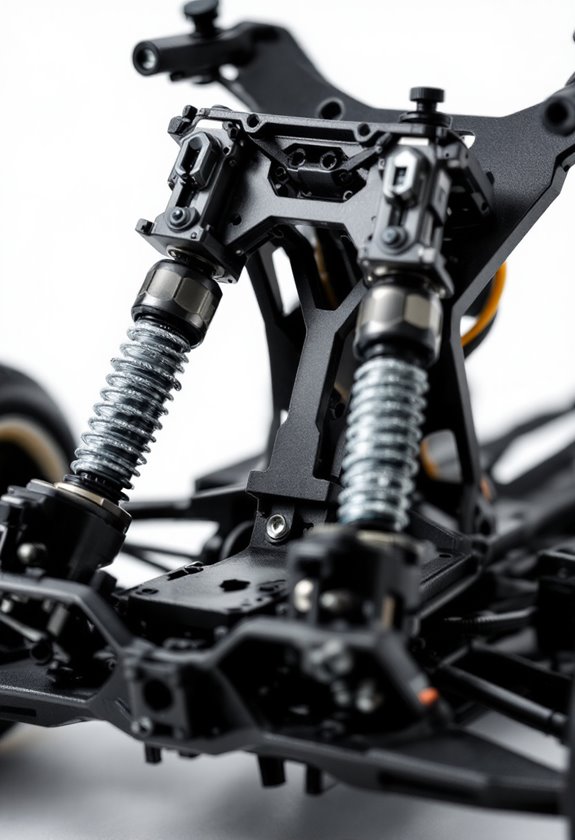
How do we make our RC racing car handle better on the track? One effective method is by adjusting the track width using different wheel hexes. Track width is the distance between the outside edges of the wheels on the same axle, which we need to modify symmetrically for balance.
Here’s how we can do it:
- Change Wheel Hexes: By switching to different sizes, we can adjust track width in small increments (±0.75 mm).
- Use Shims: Placing shims can also effectively alter wheel position.
- Suspension Inserts: These change the mounting points of suspension arms, impacting track width more considerably. Additionally, durability and construction are crucial factors to consider when tuning your RC car for optimal performance on the track.
Recommended Products

The ultimate 1/8 scale ARRMA buggy out of the box, with many laser-etched TLR Tuned parts.

All Nitro and Electric parts included in one box

Scale desert truck body with two color options
Selecting the Right Shock Oil
After fine-tuning our track width and wheel hexes for better stability, it’s time to think about the next key factor in our RC racing car’s handling: shock oil. The shock oil’s viscosity rating directly impacts our car’s performance. Generally, we should consider oils in the 350–600 cSt range, depending on our vehicle type. Thicker oils offer more control, while thinner oils improve responsiveness. It’s essential to stick with one oil brand for consistency in performance, as different brands may have slight variations in viscosity ratings. As we experiment, let’s start with a middle-range viscosity, adjusting based on our track conditions. Remember, every small change can greatly affect our jumps, cornering, and overall stability. Additionally, using oil-filled shocks with leak-proof seals can help ensure consistent performance during races.
Recommended Products
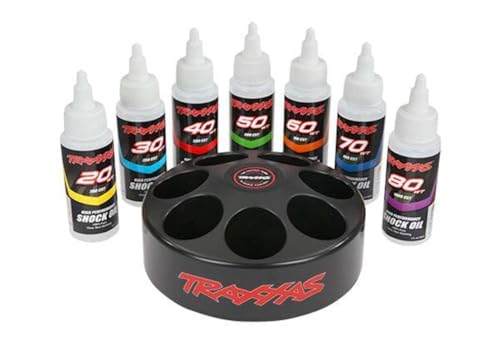
Traxxas 5038X - Shock Oil Set & Spinning Carousel Rack
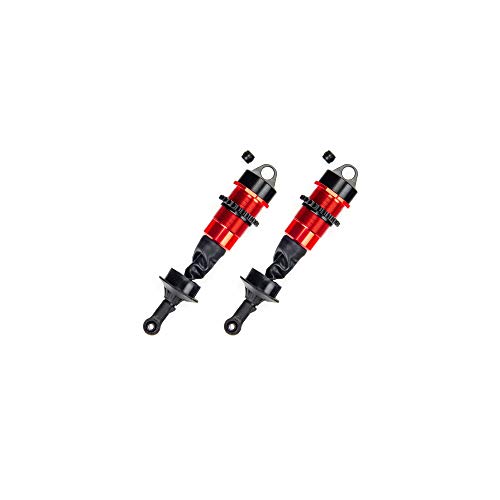
ARRMA Shock Set, 16mm Bore, 106mm Length, 2000cSt Oil, ARA330625

100% silicone shock oil for radio control applications
Monitoring Temperature Effects on Suspension
While monitoring our RC racing car’s suspension, it’s essential to understand how temperature affects performance. Temperature shifts can considerably impact oil viscosity, especially in cold weather. When the temps drop, silicone shock oils thicken, causing a firmer suspension response that may feel too stiff. Conversely, as the track heats up, oils thin, which can lead to overly soft handling and bottoming out on jumps.
Regular Maintenance for Consistent Performance
Regular maintenance is essential for keeping our RC racing car’s suspension in ideal condition so it performs at its best. We should prioritize preventive inspections to catch any issues before they become major problems. Regularly checking suspension arms for bends or cracks is important, as is inspecting shocks and springs for damage.
Following a strict cleaning protocol is also critical. After each run, we can remove dirt and grime to avoid component damage. Lubricating pivot points and hinge pins reduces friction, while ensuring all components are tightly secured helps maintain performance. Keeping a consistent maintenance schedule allows us to enjoy smooth, reliable handling on race day, guaranteeing our setup is always ready for action.
Frequently Asked Questions
How Does Suspension Tuning Affect Battery Life During Races?
Suspension tuning directly impacts our battery efficiency during races. By optimizing weight distribution, we enhance traction and smooth energy transfer, ultimately preserving battery life and allowing for longer, more powerful performance on the track together.
What Tools Are Essential for Suspension Adjustments?
Like a well-tuned orchestra, we need the right suspension tools for smooth adjustments: hex drivers, turnbuckle wrenches, and gauges. Mastering these adjustment techniques makes our racing experience harmonious and connected, boosting both performance and camaraderie.
Can I Tune My Suspension Without Prior Experience?
Absolutely, we can tune our suspension without prior experience! By following beginner tips and understanding suspension basics, we’ll gradually learn how small adjustments can greatly enhance our RC car’s performance and handling.
How Often Should I Inspect Suspension Components?
Just like a well-oiled machine, we must inspect suspension components every race day. Regular inspection intervals help us catch any suspension wear before it affects our performance, ensuring we’re always ready to dominate the track together.
What Common Mistakes to Avoid in Suspension Tuning?
We should avoid overadjusting suspension settings, neglecting maintenance, and choosing inappropriate tuning techniques. It’s essential to test each change systematically, ensuring our setups match our driving styles and track conditions for peak performance.