As an Amazon Associate, we earn from qualifying purchases. Some links on this site are affiliate links at no extra cost to you. Our recommendations are based on thorough research and editorial judgment.


What Makes A Good RC Drift Car?

A good RC drift car combines several key elements for an exciting experience. We need a sturdy chassis, like a 2 mm aluminum or carbon fiber option, for durability. A rear-wheel drive setup, along with a powerful 540-sized brushless motor, enhances control. The right tires, typically 24-26mm wide, contribute to handling. Precision suspension tuning and effective electronics, like high-quality servos and ESCs, further improve performance. Stick with us, and we’ll explore how to optimize your setup!
Key Takeaways
- A lightweight chassis, such as carbon fiber or aluminum, enhances performance and handling for smooth drifting.
- A well-tuned drivetrain with adjustable gear ratios and high-quality components ensures effective power delivery and control.
- Optimized tires with the right compounds and sizes provide the necessary traction and drift characteristics.
- Effective suspension tuning and proper alignment improve stability and predictability during drifting maneuvers.
- Regular maintenance, including cleaning and lubrication, prolongs component lifespan and maintains ideal performance.
Chassis Design and Material Considerations
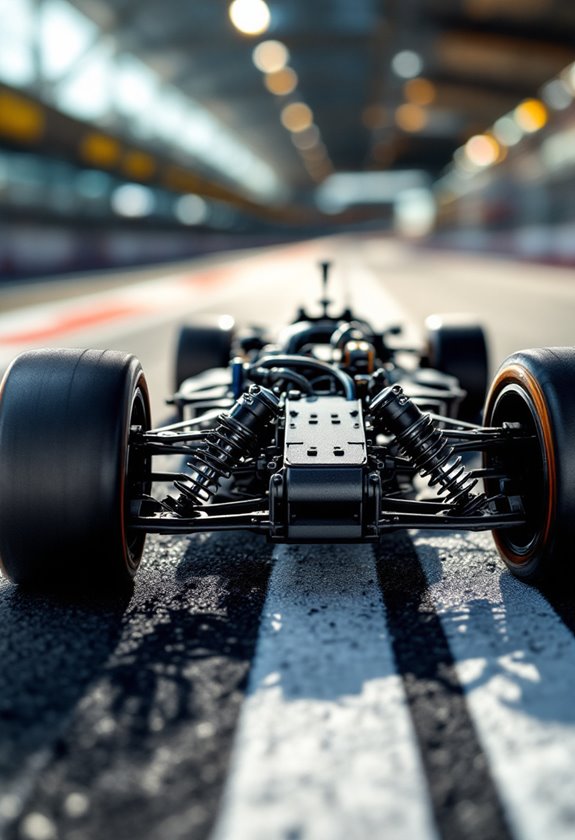
When we explore the domain of RC drift cars, the chassis design and material choices are vital components that can greatly influence performance. The chassis stiffness impacts how our cars handle, and choosing between aluminum and carbon fiber can lead to different driving experiences. For instance, aluminum, typically 2 mm thick, offers durability and is budget-friendly, while carbon fiber is lighter and stronger but comes at a higher cost. Design geometry, like steering angles and support braces, also plays an important role in ensuring structural integrity and responsiveness. We should consider weight reduction strategies without compromising performance, using precision manufacturing techniques for peak component compatibility. Balancing performance tradeoffs helps us refine our drift cars into finely tuned machines! Additionally, understanding the impact of battery configurations can further enhance the overall performance and run time of RC drift cars.
Drivetrain and Motor Specifications

For anyone diving into the world of RC drift cars, understanding drivetrain and motor specifications is crucial for achieving that perfect drift. Most of us prefer a rear-wheel drive (RWD) setup, as it provides controllable oversteer, enhancing the drift experience. Gear differentials, like ball differentials, allow for tunable slip, optimizing drift control. Also, good drivetrain efficiency can be realized through high-quality shielded ball bearings, reducing friction.
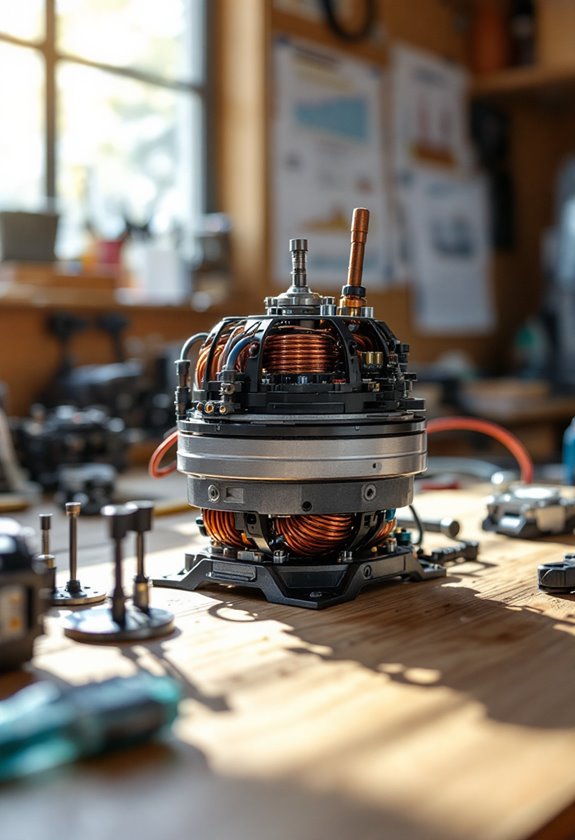
When it comes to motors, a 540-sized brushless motor with a Kv rating between 3000 and 4000 works wonders. The right motor placement guarantees balance. Remember, choosing adjustable gear ratios impacts acceleration and speed. Additionally, upgrading to a motor with higher KV ratings can significantly improve your drift performance. Fine-tuning these elements will help us create a drift car that’s not only fun to drive but also responds beautifully on the track.
Importance of Tires and Wheels

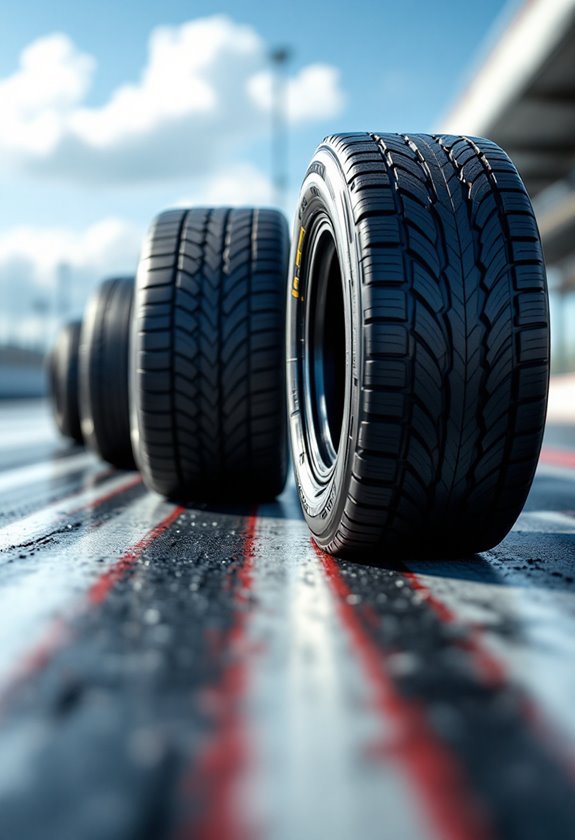
The importance of tires and wheels in RC drift cars cannot be overstated. They play a critical role in our performance, starting with tire compounds. Hard, slick compounds make drifting smoother, while softer options provide grip but wear out quickly. When it comes to wheel design, a typical width of 24-26mm balances traction and fitment ease. Scaling considerations, like choosing the right tire size of 1.55” to 3.8” for our 1/10 scale cars, impact handling too. Plus, tire inserts help with support! Material durability is essential, as it influences how long our tires last and their performance characteristics. Ultimately, a perfect balance of grip and slide emerges when we nail our tire and wheel choices, leading to more enjoyable drifting experiences. Additionally, selecting wheels with adjustable offset features can significantly enhance handling and cornering performance on the track.
Suspension and Steering Mechanics

While we explore the intricacies of suspension and steering mechanics in RC drift cars, it’s clear that these systems play an important role in how our cars handle on the track. Effective suspension tuning absorbs track irregularities, enhancing both stability and drift control. Shock absorbers and springs greatly influence how our cars react during bumps and corners. By adjusting camber, toe, and caster settings, we fine-tune tire contact and improve steering dynamics. A softer front spring and stiffer rear spring setup can facilitate easier drift initiation. Remember, balanced alignment guarantees predictable handling. Additionally, choosing adjustable shock absorbers allows for fine-tuning drift performance and adapting to various track conditions. Mastering these mechanics is crucial for optimizing our drift experience, enabling us to conquer any track with confidence and precision. Let’s embrace the journey together!
Electronics and Control Systems

As we plunge into the world of electronics and control systems in RC drift cars, understanding these components is crucial for achieving precision on the track. To guarantee smooth drifting, we need low-latency signal precision from our transmitters and receivers, with robust channel support for throttle, steering, and gyro adjustments. High-quality ESCs regulate motor speed essential for throttle modulation, while brushless motors deliver efficiency and durability. Servo quality impacts steering dynamics; we should aim for digital servos with high torque. Gyro integration offers stabilization, adjusting inputs automatically. Plus, programmable adjustments on radios and ESCs can help tailor our driving experience. By optimizing these elements, we can greatly improve our drift performance and overall enjoyment. Additionally, selecting the right drift competition tires can significantly enhance grip and control during maneuvers.
Drift Performance and Tunability
Many factors influence the drift performance of our RC cars, and tunability is key to releasing that performance. To master drift dynamics, we need to focus on a few essential tuning strategies. First, adjusting suspension—softer front springs combined with stiffer rears ease drift initiation. Next, tweaking damper settings controls weight transfer, impacting drift smoothness.
Differential care is vital—lock or tighten the rear diff for consistent power delivery, while opening the front aids steering response. Let’s not forget power delivery: boost and punch settings can greatly influence how we initiate drifts. Finally, steering geometry adjustments, like Ackermann angles, can enhance turn-in and affect drift control. Each tuning element requires careful testing to find our ideal setup. Additionally, tire types play a crucial role in optimizing speed and grip during drifting.
Weight Distribution and Balance
To achieve ideal drift performance, we need to pay close attention to weight distribution and balance. An even weight placement guarantees our car drifts well in both directions. Typically, we aim for a front-to-rear weight ratio between 34% front and 66% rear, to around 45% front and 55% rear for peak handling.
To fine-tune balance, adding counterweights opposite the motor can help but be careful—too much can hinder performance. Adjusting components like the battery and gearbox is essential for achieving that perfect distribution. Remember, proper weight distribution not only enhances stability but also helps with smoother shifts during drifting. By focusing on these aspects, we can really elevate our drifting game!
Customization and Personalization Options
When it comes to making our RC drift car truly ours, customization and personalization options play an essential role in both aesthetics and performance. We can choose unique body shells, ranging from sporty designs to iconic replicas, enhanced by paint customization that reflects our personality. Lighting effects, like LED kits and underglow, add realism, especially at night. Wheel design is key too; we can mix and match custom finishes or even try 3D-printed options. Don’t forget decal application for that extra flair! Aerodynamic accessories improve style while enhancing our car’s performance. Finally, thoughtful electronics layout and component finishes give our setups that unique touch. Ultimately, these personalization trends create cars that are truly one-of-a-kind!
Recommended Products

Rear-wheel drive (RWD)1:10 drift kit

Made by RC 4WD; RC 4WD is a USA based company; parts are sourced from Chinese producers

Hard Plastic Material: impact- plastic construction ensures scratch- performance with eco-friendly polished finish.
Maintenance and Upkeep for Optimal Performance
Maintaining our RC drift car is essential for ensuring ideal performance, and while it may sound tedious, a little routine upkeep can go a long way. First, let’s focus on cleaning techniques. We should use compressed air or a soft brush to remove dirt after each run, particularly in tough spots like the chassis and bearings. For lubricants, selecting the right one is important; WD-40 works well on metal parts, while specialized oils are best for shocks. Regularly check screws and bolts, tightening them to avoid structural issues. Don’t forget our bearings—clean them thoroughly and replace any that are worn. By making these maintenance steps a habit, we’ll keep our drift performance sharp and reliable!
Choosing the Right Setup for Your Drift Style
After we’ve tackled the basics of maintenance to keep our drift cars running smoothly, it’s time to contemplate how setup affects our drifting experience. Choosing the right setup hinges on our drift style and involves several tuning techniques. We should adjust chassis and weight distribution; aim for balanced weight transfer, and keep camber and droop settings equal for stability. Suspension needs soft front springs and firmer rears to aid drift initiation. Wheel alignment’s vital too—set slight toe-in on the rear, and align the front with a slight toe-out. Electronic systems can enhance control, so tuning our ESCs for smooth power delivery also matters. With these adjustments, we can truly enhance our drift sessions together!
Recommended Products

Over 60° of steering angle for big sideways drifts and quick transitions.

Over 60° of steering angle for big sideways drifts and quick transitions.

Over 60° of steering angle for big sideways drifts and quick transitions.
Frequently Asked Questions
What Is the Best Budget-Friendly RC Drift Car for Beginners?
For budget-friendly RC drift cars, we recommend the Yokomo RD1.0 or MST RMX 2.5. They offer great affordability comparison and beginner tips on tuning. Together, we can enjoy drifting without breaking the bank!
How Do Weather Conditions Affect Drifting Performance?
Weather conditions drastically impact drifting performance. When we fine-tune our drift setup, considering tire pressure and temperature, we enhance grip and control, ensuring every drift feels smooth, no matter if it’s hot or rainy.
Can I Use Off-Road Tires for Drifting?
No, we can’t use off-road tires for drifting. Their grip levels and aggressive tread hinder smooth slides, while drift tires offer the right balance for predictable performance. Choosing the right tire is essential to our drifting experience.
How Often Should I Replace RC Drift Car Components?
We should replace our RC drift car components based on a maintenance schedule—tires every 10-15 sessions, bearings as needed, and motors or chassis when performance drops. Regular checks help us maximize component lifespan and enjoyment!
What Are the Safety Precautions for RC Drifting Events?
Like a well-oiled machine, we’ve got to prioritize safety at RC drifting events. That means wearing safety gear, adhering to event regulations, and always watching out for fellow drivers to keep our community thriving together.