As an Amazon Associate, we earn from qualifying purchases. Some links on this site are affiliate links at no extra cost to you. Our recommendations are based on thorough research and editorial judgment.

What Frequency Do RC Cars Use?

RC cars primarily operate on several frequency bands, including 27 MHz, 49 MHz, and the modern 2.4 GHz. The 27 MHz band has six channels, while the 49 MHz band includes five channels, with common ranges typically from 15 to 30 meters. The 2.4 GHz frequency offers better signal stability and allows multiple users to race simultaneously without interference. If you’re curious about how different frequencies impact performance and regulations, there’s so much more to explore!
Key Takeaways
- RC cars commonly operate on frequency bands like 27 MHz, 49 MHz, and 2.4 GHz, among others.
- The 2.4 GHz band is the most prevalent today, offering strong signal stability and reduced interference.
- The 27 MHz band is often used for beginner toys, featuring six channels for license-free use.
- The 49 MHz band, while less common, provides five channels preferred by some hobbyists for specific applications.
- Frequencies like 40 MHz and 900 MHz also exist, allowing multiple cars to run simultaneously with minimal interference.
Common Frequency Bands for RC Cars
When it comes to remote-controlled (RC) cars, there are several common frequency bands we can use, each with its own unique characteristics. The 49 MHz band operates between 49.820 MHz and 49.900 MHz, allowing for five channels—A through E—making it great for basic RC toys. Its simplicity makes it cost-effective, but it’s not as common in professional models, which often prefer higher frequencies for better performance.
On the other hand, the 40 MHz band offers greater control and minimizes frequency interference, as it’s specifically reserved for RC models, letting us run up to 20 cars simultaneously. Both bands serve specific needs in the vast world of RC car technology, ensuring we can enjoy our hobby without interruptions. Additionally, most modern RC controllers utilize 2.4GHz frequency to enhance control range and reduce interference.
Overview of the 27 MHz Band
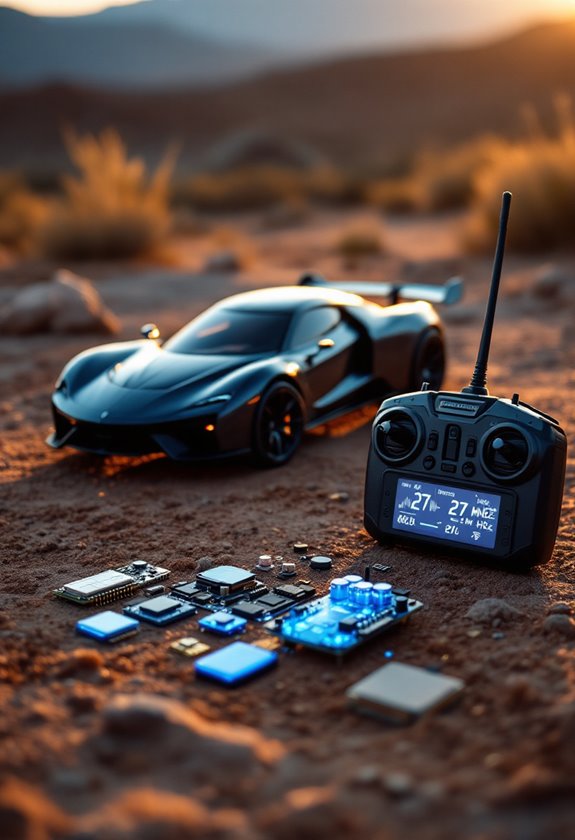
The 27 MHz band, widely used in remote-controlled (RC) cars, offers us a distinct set of advantages and characteristics that make it a popular choice, especially for toy applications. With its historical significance, the band allows for license-free operation in many countries, removing regulatory impacts that complicate other frequencies. Practical applications include its ability to handle low-power signals effectively and its sufficient range for backyard fun. However, we must be aware of frequency interference as this band overlaps with devices like walkie-talkies. Additionally, older and newer channel assignments can mix, leading to interference challenges. Overall, the 27 MHz band remains a reliable and accessible option for RC enthusiasts, offering both simplicity and performance in our toy experiences. Many beginner RC cars, especially those designed for children aged 6 to 12, utilize this frequency for ease of use and enjoyment.
Recommended Products

Excellent Anti-interference--DSSS&FHSS communication technology and 7dBi high gain antenna make AT10II transmitter with stable transmission signal and the control range is up to 2.5 miles(4km) in the air.

Multi-channeled technology will be used to provide the ability to race up to four vehicles at once on the same frequency

Includes 2-ch transmitter and 5-ch micro receiver.
Specific Frequencies in the 27 MHz Band
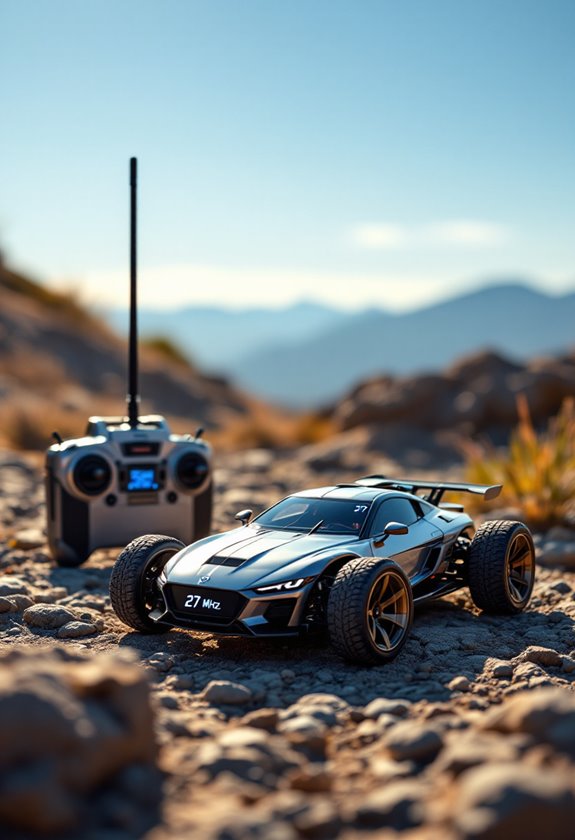
Let’s explore the specific frequencies used in the 27 MHz band for RC cars, as knowing these details can really enhance our understanding of how our devices operate. The 27 MHz applications designate six channels, spaced at 50 kHz intervals: Channel 1 at 26.995 MHz, Channel 2 at 27.045 MHz, Channel 3 at 27.095 MHz, Channel 4 at 27.145 MHz, Channel 5 at 27.195 MHz, and Channel 6 at 27.255 MHz. These channels are color-coded for easy channel identification. Modulation types primarily use AM (Amplitude Modulation), ensuring good performance. However, we should stay alert to potential RC car interference, particularly at Channel 6, which shares frequency stability with CB channel 23, leading to possible signal overlap with voice users. Additionally, understanding discharge rates can help in selecting batteries that minimize interference during operation.
Recommended Products

【Superior Anti-Interference】- With pseudo random FHSS algorithm and Latest ARM M4 transmitter chip, the Radiolink RC6GS V3 2.4ghz RC Radio Transmitter has extraordinary anti-interference ability, and distance up to 1900 feet (600 meters). Even multiple RC6GS V3 RC radio controllers are working in the same ares, there is No Any Interference! Go and enjoy the freest RC experience!

★2.4GHz 3CH remote controller with receiver specially for RC cars and boats.

TWO-WAY COMMUNICATION - Pseudo random algorithm FHSS communication technology makes RC6GS V3 control distance up to 1900 feet (600 meters) and supports over 30 RC6GS V3 working in the same area without any interference.
Overview of the 49 MHz Band
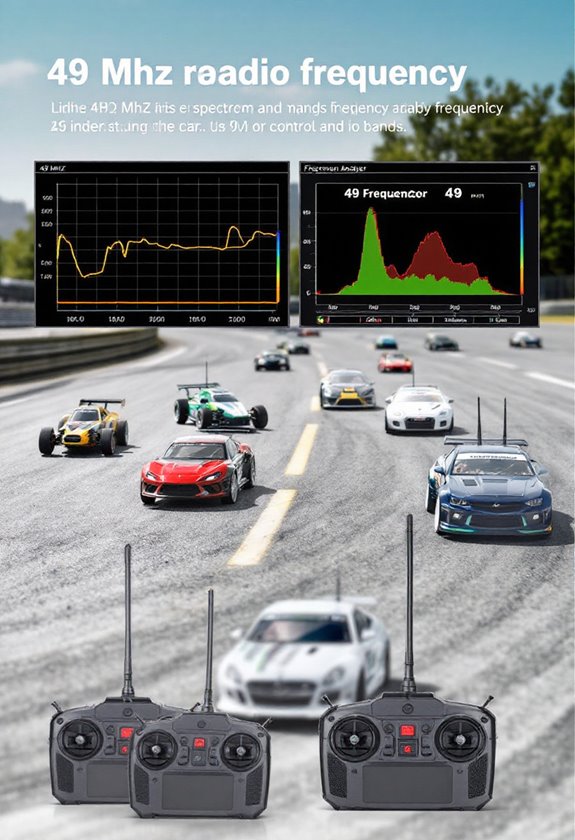
Operating primarily within the 49 MHz band offers us a unique insight into the world of remote-controlled toys. This frequency ranges from 49.820 MHz to 49.900 MHz, with five commonly utilized channels. Channel A (49.830 MHz) and Channel C (49.860 MHz) are the favorites among hobbyists. These toys are designed for affordability, governed by regulations to minimize interference with other devices.
However, it’s important to note the technical specifications of this band: the control range is typically 15 to 30 meters, and the analog control system limits advanced features. This simplicity caters to hobbyist preferences, making these vehicles easy to use. In contrast, nitro racing cars provide a thrilling experience with their combustion engines and raw power. So, whether we’re racing small trucks or stunt cars, the 49 MHz band connects us in shared fun!
Recommended Products

【Excellent Anti-interference】DSSS&FHSS communication technology makes AT9S Pro transmitter with stable transmission signal and long-range control up to 2.1 miles(3.4km) in the air.

5 Channels Mix Programmable RC Controller: Mix control can be programmed with any two channels and support one switch to activate/deactivate. It allows you to combine a variety of control combinations.

【Excellent Anti-interference】: With pseudo random FHSS algorithm, which makes RC4GS V3 with excellent anti-interference ability, control range up to 1300 feet (400 meters).
Specific Frequencies in the 49 MHz Band
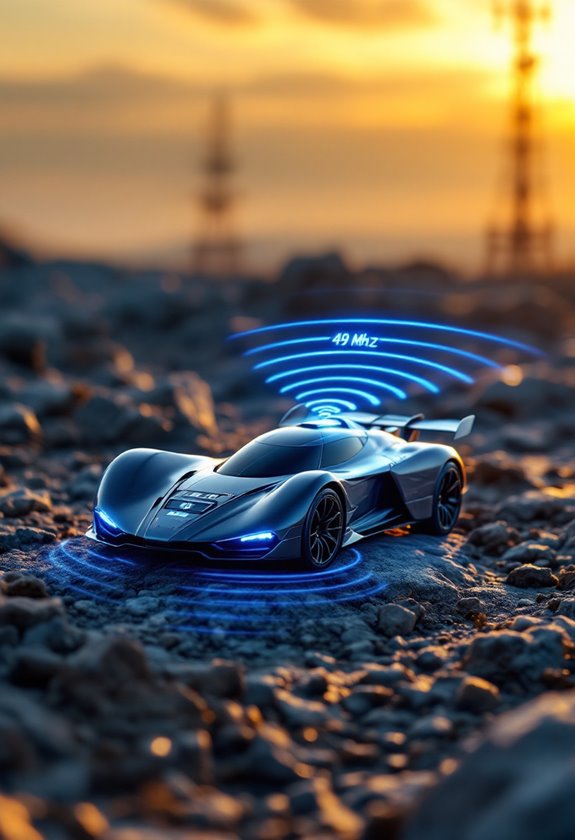
Within the 49 MHz band, several specific frequencies are allocated for RC cars, and knowing these can help us choose the right one for our needs. The common RC frequencies include 49.830 MHz, 49.845 MHz, 49.860 MHz, 49.875 MHz, and 49.890 MHz. Among these, 49.830 MHz and 49.860 MHz are the most frequently used, especially for children’s toys, due to less interference. These frequencies utilize modulation techniques like on-off keying (OOK) or amplitude modulation (AM), which are simple and effective. Each frequency corresponds to channels labeled A through E, making it easier for us to select the right one and avoid overlapping signals. This efficient channel setup is perfect for our fun and playtime adventures! Additionally, many RC cars operate on a 2.4 GHz frequency, which helps reduce interference and allows for smoother control during playtime.
Recommended Products

【Built in Gyro】: Built-in gyro can keep the vehicle in a straight line, and Gyro sensitivity can be adjusted by the transmitter's VR switch, which fits for drifting car and on-road cars. switch, which fits for drifting car and on-road cars.

【30 Models Memory Storage】: Up to 30 models memory can be saved and each model can be set upthe name and low voltage alarmseparately,signal strength.

Best Choice Combo: This rc transmitter combo include P6F,P6FG,P6DCG Receiver , We can select the receiver that is most suitable for our vehicle from the 3 receivers. The Mixed Control function, gyroscope function, and linkage simulation light group function lights can make your rc car more enjoyable.
Transition to Higher Frequency Bands
As we plunge into the change to higher frequency bands for RC cars, it’s essential to understand how this shift improves our overall experience. Higher frequencies provide better signal robustness, enabling us to enjoy lower latency and faster data transmission. This is vital, especially when competition demands rapid response times.
However, there are cost considerations; advanced modulation and antenna technology can be more expensive. Regulatory challenges must also be navigated, as not all areas permit these bands. Despite that, the potential for multiple simultaneous users without interference makes it appealing. Additionally, systems with multi-channel capabilities enhance the ability to operate in busy environments without sacrificing performance.
Embracing these higher frequencies may require us to adapt, but it ultimately opens doors for enhanced user experiences filled with exciting features and seamless operation.
Advantages of the 2.4 GHz Band
The 2.4 GHz band offers several notable advantages that enhance our experience with RC cars. First, its incredible signal stability guarantees we maintain a strong connection, even in crowded environments. The frequency hopping technology reduces interference, meaning fewer disruptions during races. Plus, with a wider channel capacity, we can enjoy simultaneous use without worrying about cross-talk.
Additionally, the compact design of 2.4 GHz systems improves user convenience, allowing for sleek and portable controllers with less vulnerability to damage. These durability improvements make our RC cars more reliable on the track. Overall, the 2.4 GHz benefits help us enjoy performance enhancements while guaranteeing compatibility advantages across a range of devices, making it a fantastic choice for all RC enthusiasts!
Recommended Products

The ultimate ARRMA 1/5 scale ready-to-run Stunt Truck
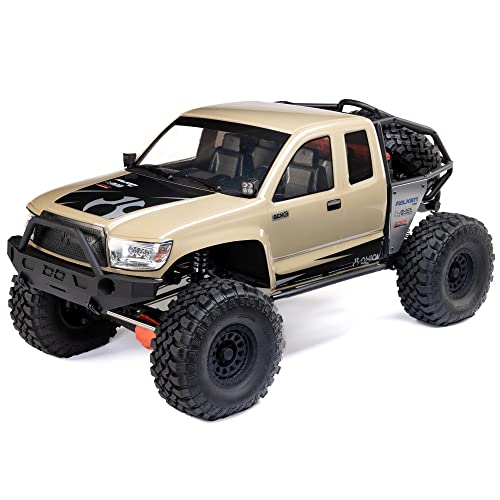
Legendary Design Heritage: Based on the legendary Axial Honcho with modernized styling and enhanced features

Phone Mirroring & Wireless Control: 15.6 inch portable android car TV supports iPhone's AirPlay and Android phone's Miracast phone screen mirrorlink.With the MyCar Link app, It easily controls the car headrest monitor screens by your phone.Warm Tip: The mobile phone and car TVs are connecting the same network.Parents can operate the headrest monitor from the front driver site.Due to built-in protection mechanisms, some third-party apps do not support screen casting under certain conditions. However, you may directly download such apps onto the rear-seat headrest display
Advanced Frequency Bands for RC Cars
Moving beyond the advantages of the 2.4 GHz band, we find exciting developments in advanced frequency bands for RC cars. These systems utilize advanced technology such as frequency hopping and digital protocols to enhance signal reliability. By managing multiple channels efficiently, they offer performance enhancements and improved racing efficiency. With telemetry systems, we can monitor our car’s data in real-time, optimizing our strategies on the fly.
Higher frequency bands enable us to access a vast range of channels—often exceeding 80—allowing channel optimization and stable connections even in close racing conditions. This capability minimizes interference, ensuring that every command reaches its destination without delay. Overall, advanced frequency bands open new doors for enthusiasts looking to elevate their RC experience.
Use of the 900 MHz Band
When it comes to using the 900 MHz band for RC cars, we notice several key benefits that can greatly enhance our experience. The 900 MHz advantages include longer ranges of up to 12 miles, thanks to superior UHF characteristics that offer better penetration through obstacles. This makes it ideal for varied environments. Many 900 MHz systems, like TBS Crossfire, use frequency hopping, which boosts signal reliability and RC telemetry. Furthermore, operating within the license-free spectrum guarantees regulatory compliance internationally, with slight variations like 915 MHz in the US and 868 MHz in Europe. With low interference compared to crowded higher bands, adopting this frequency for our RC vehicles truly optimizes performance and enjoyment, allowing us to connect seamlessly with global communities.
Use of the 1.2 GHz Band
Using the 1.2 GHz band for our RC vehicles can be a game-changer, especially for those of us seeking reliable video transmission over long distances. This frequency offers impressive long range capabilities, often exceeding 10 miles in ideal conditions. We appreciate how it provides excellent signal penetration, enabling us to navigate around obstacles with ease. In fact, video quality degrades gradually with distance, unlike higher-frequency systems that can cut out suddenly. Although it supports about eight channels, the 1.2 GHz band is less popular due to licensing regulations and bulkier antenna requirements. For those of us committed to long-range RC applications, particularly with larger models, this band promises performance that can elevate our experiences in the field!
Use of the 5 GHz Band
The 5 GHz band is quickly making its mark in the world of RC cars, particularly for those of us interested in firsthand video experiences and real-time streaming. This frequency offers distinct 5 GHz advantages, like higher data throughput for HD video and lower latency for control signals. We see 5 GHz applications mainly in advanced models with FPV technology, although they come with some 5 GHz limitations. While it reduces interference, 5 GHz performance can suffer due to shorter range and less penetration through obstacles. The 5 GHz challenges also include higher power consumption and the need for specialized equipment. Essentially, this technology is growing, but it’s still chiefly for serious enthusiasts, allowing us to explore new driving experiences like never before.
Advantages and Disadvantages of RC Frequencies
Understanding the advantages and disadvantages of different RC car frequencies is essential for any hobbyist looking to enhance their driving experience.
When we consider frequency selection, we see each has its pros and cons. For instance, 27 MHz has a broad reach and is easy for beginners, but suffers from interference. Meanwhile, 40 MHz offers fewer conflicts but comes with registration hurdles. On the other hand, the 2.4 GHz frequency boasts excellent signal reliability through spread-spectrum technology, allowing multiple cars to race without issues. However, it sometimes struggles with penetration in obstacles. By weighing these aspects against our hobbyist preferences and embracing recent technological advancements, we can choose the best frequency for our needs, ensuring an enjoyable RC experience!
Regulatory Considerations for RC Frequencies
When we explore the world of RC frequencies, it’s essential to contemplate the regulatory landscape that guides their usage. We must adhere to regulatory compliance, as the FCC oversees frequency allocation for RC devices in the U.S. Our equipment needs certification to meet technical specifications, helping prevent frequency interference. Most of us operate under license-exempt rules, but we still have user responsibilities to guarantee we’re not causing harmful interference. Let’s embrace frequency hopping technologies which improve spectrum management and ease regulatory concerns. Remember, regulations vary globally, so consulting international standards is necessary before we hit the track. By following operational guidelines and respecting licensing requirements, we can enjoy our hobby while keeping everyone sound and safe.
Future Trends in RC Frequency Usage
As we look to the future of RC frequency usage, it’s evident that exciting advancements are on the horizon. Future frequency innovations will focus on adaptive frequency management, enhancing smart RC vehicles. We’ll likely see emerging RF technologies enable IoT integration trends, making our cars smarter and more connected. Competitive frequency strategies may adapt to include millimeter wave applications for precise control in racing. Advanced telemetry options will provide real-time data, keeping us informed as we race. Additionally, as demand grows, frequency efficiency will improve, allowing for better interference management. Together, these trends will not only elevate our driving experience but also expand the community, attracting new enthusiasts into the thrilling world of RC cars!
Frequently Asked Questions
Can I Use Different Frequencies for My RC Car?
We can’t just mix different frequencies for our RC cars; it’s crucial to follow legal regulations and guarantee cross brand compatibility. Let’s stick to matching frequencies for the best experience and reliability while racing together!
How Do I Avoid Interference With Other RC Cars?
To avoid interference with other RC cars, we can choose the right frequency selection and implement interference solutions, like using 2.4 GHz systems with frequency hopping. Together, we’ll enjoy smoother races and better control!
Are There Any Frequency Limits for Racing Events?
Yes, there’re frequency regulations in place to guarantee fair play at racing events. We should always follow the racing guidelines provided by organizers, helping everyone enjoy a smooth and competitive experience together.
Can I Upgrade My RC Car’s Frequency Band?
Absolutely, we can upgrade our RC car’s frequency band! By embracing frequency modulation and shifting to modern frequency bands, we’ll soar above interference issues, enhancing our racing experience and fostering deeper connections within our shared passion.
What Factors Affect the Range of My RC Car?
When we consider what affects our RC car’s range limits, we find factors like obstacles, signal strength, and transmitter quality. By understanding these elements, we can enjoy smoother operations and longer distances together on our adventures!
