As an Amazon Associate, we earn from qualifying purchases. Some links on this site are affiliate links at no extra cost to you. Our recommendations are based on thorough research and editorial judgment.


How To Build Custom RC Crawler Car?

To build a custom RC crawler car, we start by selecting parts like high-torque brushed or efficient brushless motors and crawler-specific tires for grip. Next, we design the chassis, choosing lightweight materials and ensuring robust geometry. We choose a 4WD or 6WD drivetrain, along with a suitable electronic system like a LiPo battery and 2.4 GHz radio. Finally, we personalize it with a unique body and fine-tune its performance to conquer challenging terrains. Let’s explore each step in detail.
Key Takeaways
- Select a high-torque brushed or brushless motor for optimal power and efficiency tailored to your crawling needs.
- Design a robust chassis with proper wheelbase and ground clearance, utilizing durable materials and effective fabrication techniques.
- Choose a 4WD or 6WD drivetrain configuration, considering portal axles for improved obstacle navigation and stability.
- Incorporate quality Lithium Polymer batteries and a compatible ESC, ensuring stable power and reliable connection for smooth operation.
- Test and tune your crawler’s performance, adjusting settings and components based on terrain challenges and regular maintenance checks.
Selecting the Right Parts and Materials
When we commence building our custom RC crawler car, selecting the right parts and materials is essential to guarantee it performs well on various terrains. For motor selection, we can choose between brushed or brushless motors. Brushed motors are affordable and suitable for beginners, while brushless motors provide higher power and efficiency for advanced crawling. Understanding motor size, like the 540 or 550 class, impacts our crawler’s torque and speed.
For tire materials, crawler-specific tires made from soft rubber enhance grip on rocky surfaces. Deep treads help in traversing uneven terrain, and using beadlock wheels assures our tires maintain their position during tough climbs. Lightweight plastic wheels improve suspension response, making them perfect for our rugged adventures! Additionally, high-torque brushed motors are essential for reliable climbing performance, ensuring our custom crawler can tackle steep inclines effectively.
Recommended Products

INNOVATIVE DRIVE TECHNOLOGY: The AXP8 Gilamon 2.2 RTR is equipped with the Axial Selectable Drive (ASD), which individually blocks each rear wheel for exceptional manoeuvrability and manoeuvrability on the most demanding trails

Unmatched Attention to Detail: Every inch of the 1/6 1941 MB Scaler is crafted to perfection, from the meticulously designed paintwork and pre-installed body to the functional headlights and moveable steering wheel. Even the smallest touches, like the painted axe and shovel, show off a high level of realism.

【Savage Brushless Heart, Up to 55KM/H】Dominate the terrain with a professional Hobbywing 3652-KV3300 brushless motor and 60A ESC. This 1/10 scale powerhouse reaches speeds of 45-55km/h (35mph+). The independent electronics system is 3S LiPo compatible, offering explosive acceleration that leaves brushed RC cars in the dust.
Designing the Chassis

To guarantee our custom RC crawler car performs at its best, designing the chassis is a critical step we can’t overlook. First, we need to establish proper chassis geometry, including key measurements like wheelbase, track width, and ground clearance tailored for crawling terrains. Next, let’s focus on structural layout, ensuring effective suspension integration with reinforced mounting points for robustness. Material considerations are essential; we should balance lightweight plastics, durable metals, and strong carbon fiber based on the desired flex and strength. Additionally, remember chassis protection! Raised designs protect electronics while allowing for smooth operation. Finally, incorporating smart design features like modular sections and wiring channels enhances accessibility and maintenance ease. A low center of gravity is vital for stability during climbs, making it an important aspect of your chassis design. Let’s tackle this together, ensuring every detail is accounted for!
Constructing the Chassis

Constructing the chassis of our custom RC crawler is an exciting step that allows us to bring our design to life. First, we’ll choose our chassis materials, like plastic for beginners, metal for durability, or carbon fiber for high-performance builds. Next, we’ll explore fabrication techniques such as laser cutting for metal, or even 3D printing for complex designs.
Considering structural designs, we can opt for a ladder frame for strength, a monocoque for rigidity, or a tub chassis for protection. We’ll also focus on critical mounting features to guarantee a sturdy setup for motors and servos. To enhance durability, incorporating cross members and gussets can be key in preventing torsion during rough rides. Additionally, ensuring proper shock length is crucial for improved traction on varying terrains. Every detail matters in this process!
Choosing Drivetrain and Motor Components

Selecting the right drivetrain and motor components is essential for our custom RC crawler’s performance. For drivetrain configuration, we often lean towards a 4WD setup for consistent traction or opt for a 6WD for extreme terrains. Portal axles can elevate ground clearance, which is great for maneuvering obstacles.
When it comes to motor selection, brushed motors are affordable but may wear out quickly. We recommend brushless motors for enhanced torque and efficiency, especially in performance crawlers. You’ll want to evaluate gearing—using two-speed transmissions can provide that crawling torque we need while also giving us speed when necessary. Balancing torque and speed in our choice of motor and drivetrain is key to a successful build. Additionally, incorporating high-quality suspension systems can significantly improve handling across various terrains, enhancing the overall performance of the crawler. Let’s explore these components carefully!
Recommended Products

Officially Licensed: Designed to look and perform just like the real trucks

1/7 Large Scale & Superior Terrain Performance - 90mm ground clearance, 58° approach angle, and portal axle design for unrivaled all-terrain passability, easily conquering complex off-road conditions

RIAARIO 1/7 Brushless RC Crawler Cars, RC Truck, 4WD, Waterproof, Blue, Ages 8+(Not Include Battery)
Powerful & Efficient Drivetrain: Features a 4282-2600KV Sensorless Brushless Motor (high-speed digital sensor, plug-and-play, no calibration needed) paired with a 140A ESC supporting 2-4S LiPo batteries. FOC technology saves 5%-20% energy compared to traditional square wave ESCs, significantly extending runtime for extended crawling adventures
Implementing Electronic Systems

When building our custom RC crawler, implementing electronic systems is essential for its overall performance and reliability. We’ll start with battery management; using Lithium Polymer (LiPo) batteries is a must due to their energy density and lightweight. Next, our electronic speed controller (ESC) should match the motor’s requirements to avoid damage. Integrating a Battery Eliminator Circuit (BEC) helps regulate the voltage for servos and receivers, preventing brownouts. It’s important to check connections and use high-quality wires to guarantee stable power delivery. For our radio control system, we’ll prioritize a 2.4 GHz frequency that minimizes signal interference, allowing smooth control. Remember, positioning antennas correctly can greatly enhance our crawling experience! Additionally, choosing a battery with a higher discharge rate can provide improved responsiveness and performance during challenging terrains.
Recommended Products

Officially Licensed 2021 Ford Bronco Body with clipless Body mounting

Officially Licensed 2021 Ford Bronco Body with clipless Body mounting

Officially Licensed 2021 Ford Bronco Body with clipless Body mounting
Installing Suspension and Steering Assembly
After powering our RC crawler with a solid electronic system, it’s time to focus on the installation of the suspension and steering assembly. First, we’ll tackle suspension techniques. High-clearance links enhance ground clearance, while proper alignment guarantees geometry. Remember to test movement to avoid binding. For the cantilever setup, apply light grease to bearings and confirm correct lever orientation.
Next up is steering calibration. Secure the steering servo firmly to avoid vibrations and adjust linkage rods for equal lengths. Setting the servo horn angle properly prevents issues like toe-in. Finally, check the full steering range with the transmitter to verify precision. Balancing these elements is essential to creating a reliable crawler that can navigate any terrain! Additionally, incorporating high-torque gear sets can significantly improve your crawler’s performance and durability.
Recommended Products

Aggressive Off-Road Stance: Instantly boost your 2-Door Wrangler’s look and trail capability with a 2.5-inch lift - perfect for fitting larger wheels and tires for rugged adventures.
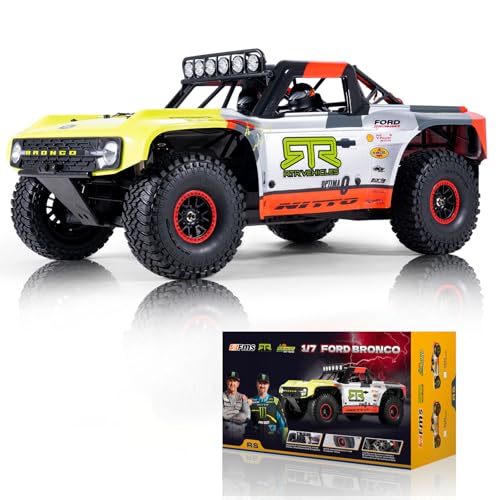
【Fms 1/7 Ford Bronco RTR EB Brushless RC】Officially Licensed by Ford and RTR Vehicles, this model is based on the Ford Mustang racing car that competes in the Ultra4 event. It combines RTR design concepts with cutting-edge racing technology to perfectly reproduce the ultimate driving pleasure of racing on a 1/7 scale platform.

Tamiya Rock Socker has a Tamiya legend as a bodywork, connoisseurs immediately remember the stadium speed flasher.
Attaching the Body Shell
Before we immerse ourselves in attaching the body shell, it’s important to understand the significance of selection and preparation. A polycarbonate body shell is ideal for its lightweight and durable properties, ensuring compatibility with our crawler chassis.
First, we need to mark and align our mounting holes accurately. Using an old shell as a template helps us avoid any fitment issues. Cutting with precision is vital; we should use a sharp hobby knife to trim lines smoothly.
Next, we should attach the shell using body posts and clips for secure but easy removal. It’s important not to overtighten, as that can crack the shell. Finally, double-check all mounting techniques to make sure everything is stable and functioning well. Happy crawling!
Customizing the Aesthetic Features
Once we’ve securely attached the body shell, the fun really begins—customizing the aesthetic features of our RC crawler car. We can kick things off with custom paint techniques, like using candy colors for a glossy finish or multi-layer painting for durability. Adding realistic details is key: we can attach miniature accessories like windshield wipers, scale mirrors, and even driver figures to elevate authenticity. Don’t forget about custom decals and weathering effects to simulate wear and tear. Creating controlled imperfections, like scratches or dents, gives our crawler a rugged look. Finally, we can enhance lighting with LEDs for a striking visual impact. Each choice we make brings us closer to crafting a one-of-a-kind, eye-catching creation.
Tuning for Performance
Tuning for performance can transform our RC crawler from a basic vehicle into a high-performing machine ready to tackle any terrain. First, let’s focus on ESC tuning. Adjusting the throttle punch and drag brake can enhance our crawler’s responsiveness, making it more suited for different terrains. Next, we should consider suspension adjustments; tweaking the caster angle and ride height can considerably impact handling and stability.
For engine tuning, balancing carburetor jet settings helps optimize power. Tire optimization is essential too; selecting the right compounds improves grip on various surfaces. Finally, we can’t forget weight distribution. Adjusting where weight sits on our crawler can drastically enhance climbing ability and stability. By fine-tuning these elements, we can create an agile, capable crawler that fits our personal preferences.
Recommended Products
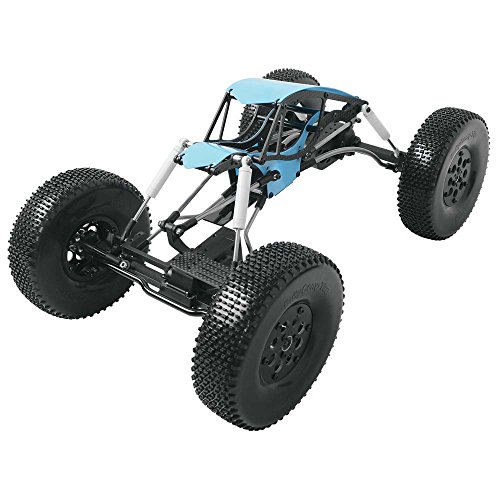
This is a competition RC Crawler Kit which requires assembly. Wheelbase: 12.5" (317mm) | Width: 10" (254mm) | Height: 7.2" (182mm) | Ground Clearance: 3.6" (92mm) | Final Drive Ratio: 40.7:1 | Weight: 4.38lbs (1.99Kg)

Unassembled TRX-4 Chassis Kit with Full-Color Assembly Manual

1/18 RTR Crawler – The Terra COMP Black Flame Edition arrives pre-assembled with premium components including a carbon fiber chassis, aluminum parts, Micro Stellar transmission, wheels, and tires. Just add a 2S–3S LiPo battery and hit the rocks.
Testing and Fine-Tuning Your Crawler
When we head out to test and fine-tune our RC crawler, it’s important to adopt a systematic approach for the best results. First, we should perform terrain testing on rocky surfaces. This simulates tough conditions and helps assess our crawler’s obstacle handling. We can use GPS speedometers to record speeds and handling data. By progressively increasing obstacle difficulty, we create opportunities for adaptive tuning.
Regularly maintaining our crawler is essential, too. We need to clean, lubricate, and check tire wear post-run. During tests, we can experiment with throttle management and maneuvering techniques to improve our skills. Recording our runs and analyzing video footage gives us insights into performance, guiding future upgrades and ensuring our crawler always performs at its best.
Frequently Asked Questions
What Tools Are Essential for Building an RC Crawler?
To build an RC crawler, we need essential tools like soldering tools for wiring and precise measuring instruments for wheel alignment. These tools help us create an awesome crawler that performs and looks great together.
How Do I Maintain My Custom RC Crawler?
We’ve got to focus on tire maintenance and battery care, ensuring every part’s in top shape. Let’s check for wear and keep batteries charged, so our custom crawlers are always ready for the next adventure!
Where Can I Find Replacement Parts?
We can find replacement parts at various online retailers like AMain Hobbies or RC Superstore, and don’t forget our local hobby shops too; they’re great for quick fixes and expert advice from fellow enthusiasts.
What Safety Precautions Should I Follow While Building?
When we commence our building journey, let’s don our safety gear, create a fire-safe work area, and embrace electrical safety. Together, we’ll craft with care, ensuring our passion blossoms without hazards lurking in the shadows.
How Do Weather Conditions Affect RC Crawler Performance?
Weather conditions greatly affect our RC crawlers. Rainy days can reduce mud traction and create instability on rocks. We need to adjust by choosing tires and setup that enhance performance for the conditions we face together.