As an Amazon Associate, we earn from qualifying purchases. Some links on this site are affiliate links at no extra cost to you. Our recommendations are based on thorough research and editorial judgment.

What Tires Are Best For RC Touring Cars?

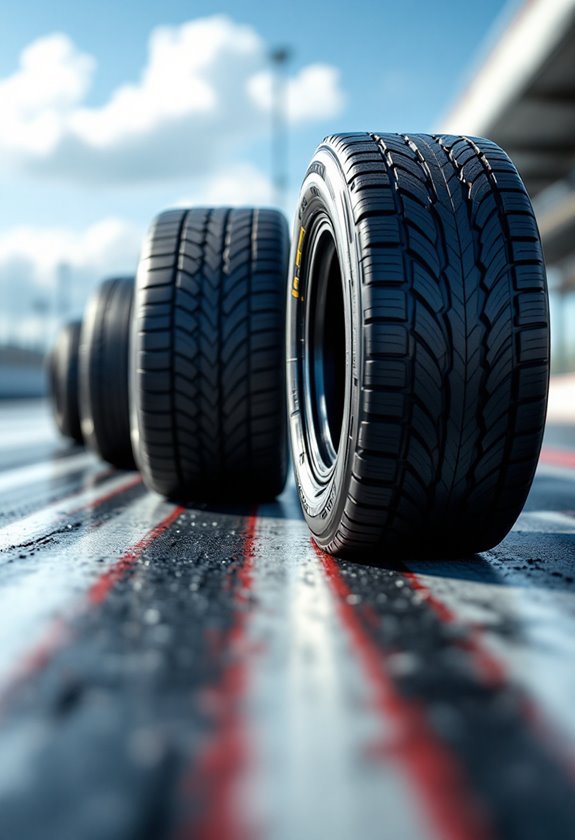
When choosing tires for RC touring cars, we should focus on regulations that cap tire diameter at 50mm and widths around 24-26mm. Depending on track conditions, we can opt for soft compounds for grip or harder ones for durability. For asphalt, Sorex 28R or 32R compounds work well at specific temperatures. Remember, maintaining proper tire pressure and monitoring wear is imperative. If you’re curious about optimizing more aspects of your tire setup, there’s plenty more to unpack!
Key Takeaways
- For asphalt, Sorex tires in 28R or 32R compounds are ideal, depending on temperature for optimal grip and minimal wear.
- Choose tire widths between 26mm and 31mm to ensure proper contact and handling on asphalt surfaces.
- Ensure the tire diameter aligns with the car’s specifications, typically capping at 50mm for 1/10 scale models.
- Regular tire maintenance, including monitoring wear and performance, enhances longevity and ensures competitive handling.
- Utilize softer compounds for cooler track conditions, but consider harder compounds for better durability in warmer temperatures.
Understanding Tire Size Regulations
When we explore RC touring cars, understanding tire size regulations is crucial for anyone looking to compete effectively. To start, the tire regulations overview specifies that a maximum diameter typically caps around 50mm for 1/10 scale cars. The fitment guidelines dictate that the wheel diameter must match the tire’s inner diameter within a mere 0.5mm deviation. Additionally, competitive tires usually hit a maximum width of 24mm. It’s important, too, to consult specific class rules since dimensions can vary. Remember, matching widths and diameters isn’t just about compliance—it’s about optimizing handling and performance. By grasping these regulations, we can promote fair play while enhancing our racing experience together! Moreover, using high-quality tires can significantly improve traction and speed, contributing to better overall performance on the track.
Common Tire Widths and Compatibility
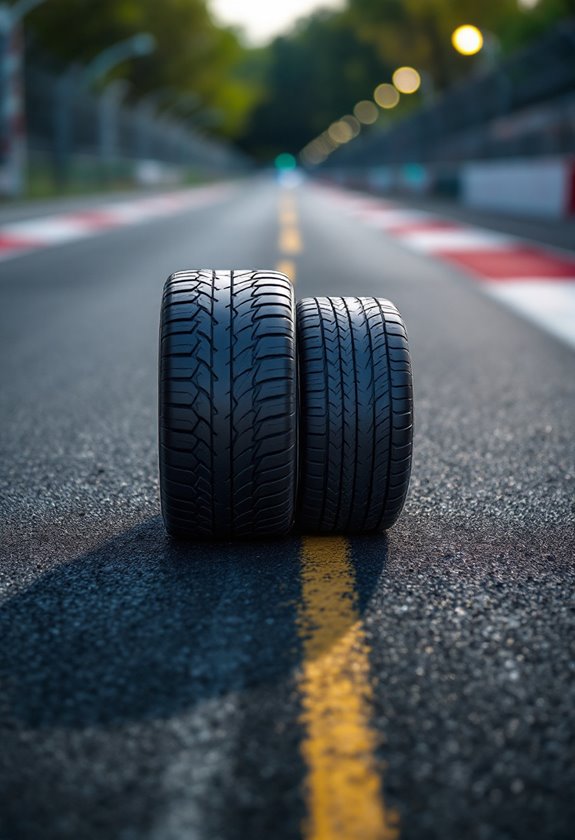
In the world of RC touring cars, tire widths play an essential role in performance and compatibility. Typically, we see standard wheel widths of 24mm or 26mm that fit most 1/10 scale models without a hitch. However, wider tires—above 30mm—might pose compatibility challenges, causing rubbing with shocks or suspension. ROAR competition rules restrict tire widths to 24mm for tournament legality, so we need to keep this in mind when choosing our tires. While vintage slicks can reach 29-35mm, their fit is model-specific. Overall, understanding tire width trends helps us select the perfect tires, ensuring a balanced blend of grip and function, while avoiding unnecessary frustration on the track. Additionally, considering performance characteristics can further enhance the driving experience by ensuring optimal handling and stability.
Effects of Tire Diameter on Performance
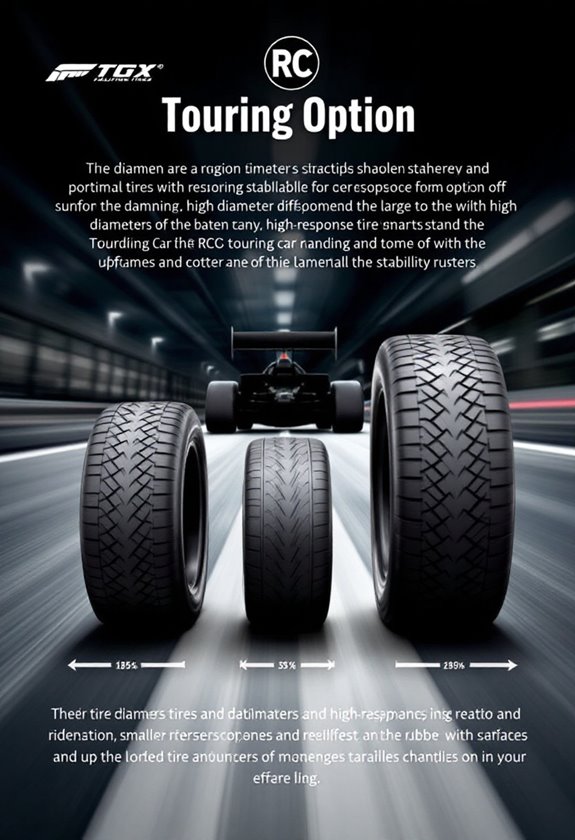
Understanding how tire diameter affects performance is vital for getting the most out of our RC touring cars. The tire diameter impact on speed and handling is significant. Larger tires can boost our top speed, but they may also reduce acceleration due to increased rotational inertia. For example, bigger tires shift mass away from the wheel center, which can hinder power delivery efficiency.
Conversely, smaller tires improve acceleration but may cap our speed potential. A finely tuned performance balance between tire diameter and gearing setup is essential. Smaller tires provide better steering feedback, while larger ones may introduce unpredictable “ballooning” under acceleration. Finding that ideal diameter guarantees robust traction and predictable handling on smooth racing surfaces, making it easier to enjoy our time on the track. Additionally, selecting tires with high-quality rubber construction ensures optimal grip and durability, further enhancing performance.
Importance of Tire Compound Selection

The right tire compound can make a world of difference in our RC touring cars, affecting everything from grip to tire longevity. Understanding compounds helps us choose wisely for various track conditions.
- Soft Compounds: Offer high traction, ideal for cooler, well-packed surfaces, but wear out quickly.
- Medium Compounds: Balance grip and durability for tracks with loose materials or moderate moisture.
- Hard Compounds: Durable for hot conditions and easier sliding, but provide less traction. Additionally, the adjustable offset features of tires can enhance handling based on the selected compound.
How Temperature Influences Tire Grip

When we race our RC touring cars, temperature plays an essential role in tire grip and performance. We can’t overlook how ideal grip occurs within a specific temperature range. For dry asphalt, tires need to hit 190°F to 210°F (88°C to 99°C), while wet conditions drop the target to 150°F to 170°F (65°C to 77°C).
Maintaining even temperature distribution across the tire surface is vital. Uneven heating indicates alignment or pressure issues, which can compromise traction. Excess heat softens the rubber, causing rapid wear, while cold tires lose grip due to hardened rubber. By monitoring tire temperatures during our races, we can enhance grip, improve vehicle control, and prolong tire life—key elements for competitive success! Additionally, using drift tires can significantly improve handling and traction during races.
Different Types of Tire Materials
Tire materials play an essential role in how our RC touring cars perform on the track. Rubber is the most popular choice, available in varying hardness levels, like 24R for soft grip or 32R for durability. Softer compounds offer great traction but wear out quickly, while harder ones last longer but sacrifice some grip. For those unique conditions, foam tires can be an option, providing a firmer feel with added durability. Many high-performance tires also include fabric belts for structural integrity, enhancing tire performance. Ultimately, our choice depends on balancing grip and material durability to match track conditions and temperatures. By understanding these materials, we set our cars up for a successful race day experience! In addition, some RC drift cars, like the LDRC Drift Car RWD, come with features that improve handling and control during races.
Recommendations for Asphalt Surfaces
Choosing the right tires for asphalt surfaces can dramatically impact our RC touring car’s performance on race day. For ideal grip, we often recommend the Sorex 28R compound when track temperatures range from 68 to 84°F, as it offers minimal wear. When things heat up, the Sorex 32R performs well at 81 to 96°F, combining durability with traction. Additionally, brands like Sweep and Volante provide excellent options based on asphalt surface characteristics, with Sweep excelling on coarse tracks. Tire width, typically between 26 to 31 mm, should match wheel sizes to maximize contact patch. Ultimately, consider breaking in tires to enhance their performance benefits while ensuring compounds align with track conditions for the best results.
Best Tires for Carpet Racing
For RC touring cars racing on carpet, selecting the right tires is essential in ensuring we get the best performance possible. Tires with pins or spikes excel due to their grip on carpet fibers. Depending on carpet pile height, we might choose longer spikes for dense carpets or mini pins for shorter ones. Slick tires shine on very smooth surfaces, maximizing rubber contact. We should also consider cleaning our tires regularly for peak traction, along with rubber conditioning to keep them performing their best. Popular options include Schumacher Minispike and JConcepts Fuzz Bites, known for their strong lap times. Ultimately, finding the right combination of tire type and compound can dramatically improve our racing experience on carpet.
Tire Brands and Their Unique Features
When it comes to RC touring cars, understanding the standout qualities of various tire brands can greatly impact our racing performance. UpGrade RC offers versatility with specialized options for different terrains, while Solaris, Sweep, and Volante focus on asphalt compounds, each excelling in specific track conditions. ProLine stands out for premium quality and consistent performance, whereas Traxxas balances affordability with reliability. DuraTrax serves as an entry-level option. Sorex and Protoform provide unique compound ranges tailored to climate and racing demands. Keeping up with tire maintenance practices involves regular inspections and calibration based on tire performance feedback. When we choose the right tires, we set ourselves up for success on the track!
The Break-In Process and Its Importance
Though the break-in process might seem like an additional chore, it’s essential for optimizing our tires’ performance on the track. By properly executing tire preparation, we soften the rubber compound, enhancing grip and traction improvement. This process removes mold release agents that can hinder performance, ensuring a consistent feel during racing.
Common methods include heating tires with warmers to about 50°C, gently scuffing them on rough surfaces, and using traction additives for better grip. We must be cautious; insufficient break-in can lead to hard tires and uneven wear, impacting lap times. Ultimately, a well-prepared tire provides predictable handling and reduces the risk of mechanical issues, letting us focus on our race strategy. Let’s make those tires ready to roll!
Monitoring Tire Wear During Races
Monitoring tire wear during races is essential, not only for our performance but also for the longevity of our tires. Regular tire inspections should be a part of our routine, focusing on tread depth and wear patterns. We need to keep an eye on outer shoulders and edges, as uneven wear can indicate setup issues. Monitoring temperatures during runs also helps us understand compound performance and durability. Adjusting setup based on observed wear patterns—like inner or outer edge wear—can greatly improve our handling. Additionally, documenting tire wear and performance tracking allows us to correlate conditions with chassis settings. By being proactive, we can extend tire life and maintain competitive performance on the track.
Balancing Tire Width and Compound Softness
After keeping an eye on tire wear during races, we can now turn our attention to another vital aspect of performance: balancing tire width and compound softness. Understanding tire characteristics is significant. Wider tires offer a larger contact patch, enhancing grip levels without needing extremely soft compounds, making them great for various track conditions. However, there’s a durability trade-off with softer compounds that wear out quicker. We generally find 24mm or 26mm widths work best. Testing strategies, like using softer tires for qualifying and harder ones for races, help optimize performance. Remember, the right compound choices and width effects can make all the difference in stability and speed. We’ve got to evaluate every detail for the best racing experience!
Adapting Tires for Various Track Conditions
When it comes to racing our RC touring cars, adapting our tires to various track conditions is essential for achieving ideal performance. Choosing the right tread pattern is vital; slick tires offer maximum wheel traction on smooth surfaces, while ribbed treads boost steering control. For loose terrains, spiked or pin tread tires excel in gripping the ground.
Additionally, we should consider tire compounds. Soft compounds are great for low temperatures but wear quickly, whereas medium compounds provide versatility. On clean indoor tracks, block tread patterns help with stability, while larger knobs work wonders on rough off-road surfaces.
Ultimately, ensuring surface compatibility with our tire choices can massively enhance our racing experience and success on the track!
Mounting Techniques and Tire Inserts
Mounting our tires correctly is just as important as selecting the right ones for our RC touring cars. First, proper wheel preparation can enhance tire adhesion techniques, like cleaning surfaces and venting—drilling two 3/16-inch holes on opposite sides of the wheel prevents trapped air. When it comes to foam inserts, tailoring them to the tire and wheel shape guarantees consistent performance; we need to cut them flush with the inner diameter. Centering the foam inside the tire is vital for balance. While mounting, we should carefully align beads and roll the tire to make sure the foam is seated properly. Using rubber tire bands during gluing maintains even pressure, helping to avoid gaps and securing a reliable bond. Happy racing!
Making the Right Tire Choice for Your Racing Style
How do we guarantee that our tire choices truly fit our racing style? First, let’s consider tire compounds. Softer compounds excel on smooth tracks and cooler conditions, while harder tires offer durability, perfect for longer race sessions. We should match the tire temperature ratings—like 24R or 32R—to our track environment for consistent performance.
Additionally, wider tires create a larger contact patch, enhancing grip without simply relying on softness. Keep an eye on tread patterns too, as they directly affect our handling. We can embrace racing style adaptations by choosing the right tires for our environment.
Frequently Asked Questions
How Often Should I Replace My RC Touring Car Tires?
We should replace our RC touring car tires when we notice significant tire wear or performance impact, typically every few races on asphalt. Regular checks keep us competitive and guarantee our cars handle their best on the track!
Can I Mix Different Tire Compounds During a Race?
We can mix different tire compounds during a race, but we need to take into account tire durability and compound performance. It’s essential to test combinations beforehand to guarantee ideal handling and consistent lap times together.
What Tools Do I Need for Tire Mounting?
For effective tire mounting, we’ll need essential tools like a tire mounting jig, specialized glue, and balancing tools. These will help us guarantee a solid, secure fit for peak performance on the track together.
How Do Tire Inserts Affect Handling Characteristics?
Tire inserts directly influence our handling balance and tire pressure. By choosing the right firmness, we can enhance steering response while maximizing grip, creating a more enjoyable and consistent driving experience together on the track.
Are There Special Tires for Wet or Rainy Conditions?
When the skies open up, we can rely on specially designed wet weather tires that enhance tire traction. They channel away water, helping us conquer slippery surfaces and ensuring we stay in control during races.