As an Amazon Associate, we earn from qualifying purchases. Some links on this site are affiliate links at no extra cost to you. Our recommendations are based on thorough research and editorial judgment.
How To Choose RC Car Based On Skill Level?

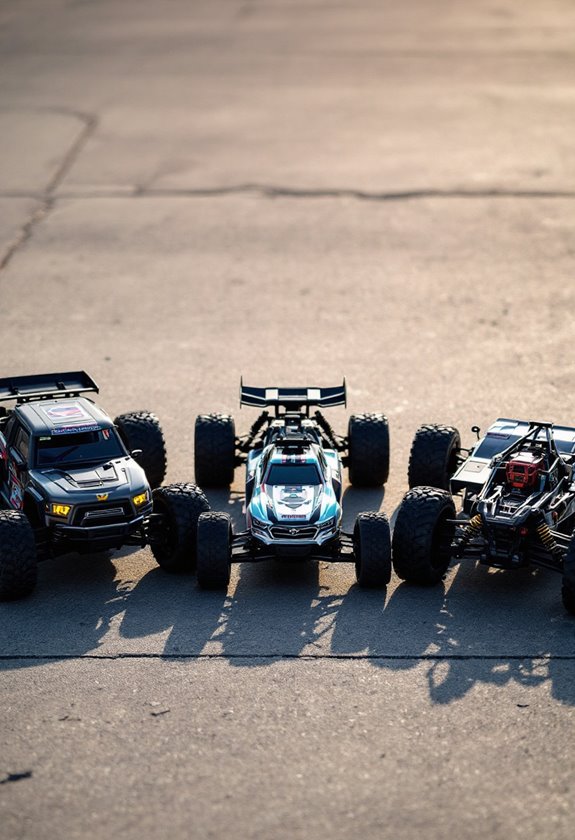
Choosing an RC car based on our skill level is key to enjoying the hobby. For beginners, we recommend RTR electric models, like the Traxxas Ford GT, with speeds of 20-30 mph. Intermediate options offer 4+ channel controls and speeds between 30-45 mph. Advanced users can choose nitro engines and exceed 60 mph. Always consider budget too, with entry-level cars priced between $100 and $200. Each skill level has distinct features, and there’s so much more to explore!
Key Takeaways
- Identify your skill level: beginners should choose RTR electric models, while intermediates and advanced users can explore more complex options.
- Consider speed ranges: beginner models typically go 20-30 mph; intermediates reach 30-45 mph, and advanced models can exceed 60 mph.
- Evaluate control complexity: beginners need basic controls, intermediates benefit from proportional controls, and advanced users may prefer customizable kits.
- Set a budget: entry-level models usually range from $100 to $200, with additional costs for batteries, chargers, and maintenance tools.
- Select the appropriate terrain type: choose 1/10 scale off-road options for beginners and adaptable trail trucks for intermediate users.
Understanding Skill Levels in RC Cars
When we plunge into the world of RC cars, understanding skill levels is crucial, especially if we’re just starting out or looking to advance our hobby. Knowing where we stand can guide our purchases and enhance our experience.
For beginners, we recommend electric Ready-To-Run (RTR) models like the Traxxas Ford GT, which are simple, stable, and low-maintenance—great beginner tips! As we progress to intermediate choices, 4+ channel controllers allow us to gain more control with upgraded models reaching around 50 mph. Finally, advanced models are for experienced users who can handle nitro engines and high-speed settings over 60 mph. Engaging in hands-on building kits, such as STEM education options, can also enhance our understanding of engineering principles.
Conducting a skill assessment guarantees we choose the right type of RC car, preventing frustration and maximizing enjoyment.
Recommended Products

Based on the ROAR National Championship winning TLR 8IGHT-X platform

Fully assembled and ready-to-run — only battery and charger required

Speed Ranges and Performance Expectations
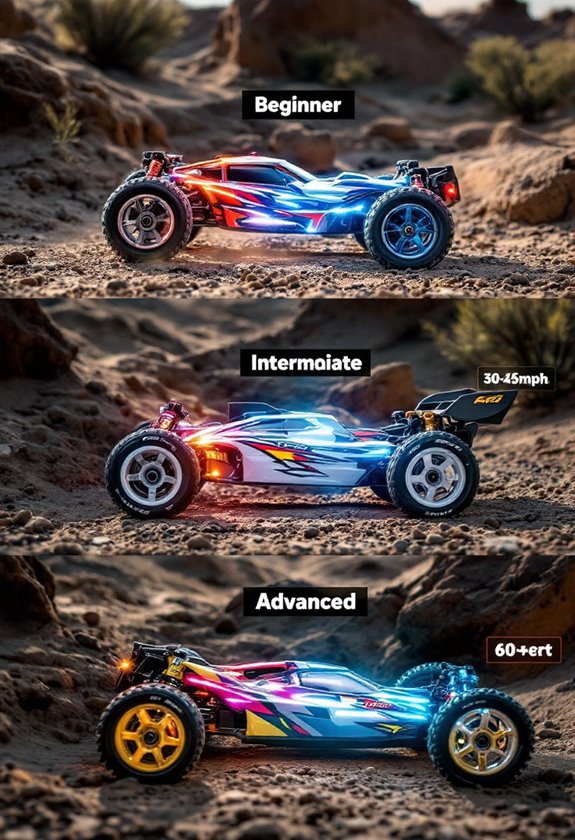
As we evaluate different RC cars, understanding speed ranges and performance expectations can really help us make informed choices. Beginner models typically reach speeds of 20 to 30 mph, striking a balance between fun and control. They often come pre-tuned to provide stability, critical for those just starting out. As we progress to intermediate cars, expect speeds between 30 to 45 mph, offering thrilling excitement while still manageable. Advanced drivers can push electric models beyond 60 mph with careful tuning and performance upgrades like better batteries. Ultimately, we should consider speed control features and tuning options to match our skill levels and desired experience, ensuring we grow our abilities at a comfortable pace. Additionally, models like the HAIBOXING 1:18 Scale demonstrate how performance features can enhance the overall driving experience.
Recommended Products

DJI Authorized - Includes Full USA Warranty + 2 Year CPS Extended Warranty | DJI Mavic 4 Pro | MASTER ANY SHOT WITH A PRO-GRADE TRIPLE CAMERA SYSTEM - The massive 100MP 4/3 CMOS Hasselblad main camera delivers breathtaking detail and true-to-life color, while 2 telephoto lenses unlock dramatic zoom and cinematic perspectives. Advanced features like Dual Native ISO and RAW stacking ensure unparalleled image quality and dynamic range, giving you the power of an entire camera bag in the sky.

Long Stroke: Take long stroke as the engine design blueprint, it effectively provides higher torque. And the customized flexible oil seal ensures excellent sealing performance in high speed operation.

See the bigger picture: equipped with a Hasselblad l1d-20c camera with a 20MP 1” CMOS sensor, The Mavic 2 lets you capture gorgeous aerial shots in stunning color detail.
Control Complexity and User Experience

There’s a lot to contemplate regarding control complexity and user experience in RC cars, especially if we want to match our skills to the right model. For beginners, control simplicity is key. We should consider RTR models labeled “novice” or “starter,” as they offer basic controls and training modes that ease handling. As we progress to intermediate levels, we can explore cars with fully proportional controls, enhancing our driving skills while still focusing on simplicity. Advanced customization comes into play with kits requiring assembly and offering options like electronic speed control, providing fine-tuned preferences. Remember, our choice impacts not just our driving experience but also how quickly we adapt and grow in this engaging hobby! Additionally, understanding battery life is crucial, as it directly affects the enjoyment of our driving sessions.
Recommended Products

■ Lightweight aluminum diffuser axle

Hot Wheels delivers the ultimate racing set with enhanced Artificial Intelligence smart cars that help you stay on track. The A.i. also controls rival racers who will stop at nothing to overtake you and speed to victory.

Use alone or with other LandWave ramps and decks to create the ramp system you dream about
Budgeting for Your First RC Car

Budgeting for our first RC car can be a bit overwhelming, especially with so many options available. We want to start with entry-level models priced around $100 to $200, balancing quality and affordability. It’s wise to account for extras too; additional rechargeable batteries cost between $30 and $80, and quality chargers can run up to $100. Planning ahead for tools and replacement parts is essential, considering basic tools and spare tires will keep our investment running smoothly. Let’s stick to RTR (ready-to-run) models to simplify our entry into the hobby. This approach helps avoid overspending while we confirm our interest. With some careful budget planning, we can enjoy this exciting journey together without breaking the bank! Additionally, considering performance features required can help ensure we choose a model that meets our skill level and preferences.
Recommended Products

2S And 3S Ready, For Brushless Beginner To Pro-Level Speeds

2S And 3S Ready, For Brushless Beginner To Pro-Level Speeds
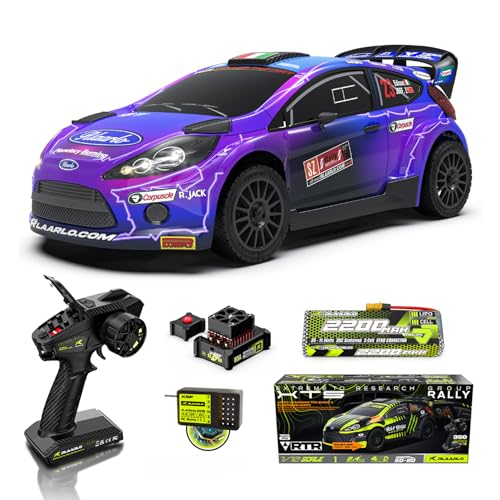
This Brushless RC Rally Car features a 60A ESC and a 3650-3300KV motor, both equipped with cooling fans and a metal heatsink, allowing the car to reach impressive speeds of up to 80KM/H when powered by attached 3S 2200mah battery.
Recommended RC Car Types by Terrain and Skill

When it comes to selecting the right RC car, understanding the terrain and your skill level is essential. For beginners, we recommend 1/10 scale off-road options like 2WD buggies, which help develop control. Intermediate drivers might enjoy trail trucks for their vehicle durability and terrain adaptability. If you’re drawn to on-road varieties, 1/10 scale touring cars offer fantastic performance specifications without overwhelming complexity. Larger scales, like 1/6 or 1/5, excel in power but demand experience. Essential features include adjustable speed modes for novices to gradually access advanced upgrades. Additionally, consider models with high-impact resistant materials for enhanced durability, ensuring they can withstand rough use. Whatever your choice, guarantee it matches your skill and typical environment, creating a balanced experience that enhances excitement and enjoyment.
Recommended Products

Maxx Ultimate receives substantial upgrades in key areas of performance: suspension, chassis, and driveline. Tough 6061-T6 aluminum chassis and suspension parts deliver bombproof strength with show-stopping looks. Steel CV driveshafts and Mod-1 steel gears offer maximum torque handling and durability.

Officially Licensed: Designed to look and perform just like the real trucks

1/10 scale R/C assembly kit
Safety Features and Best Practices by Skill Level
Choosing the right RC car isn’t just about the vehicle itself; it heavily relies on understanding the safety features and best practices that align with our skill levels. For beginners, durable construction and built-in speed controllers are essential for safety assessments. As we progress, enhanced suspension systems and modular designs become important for intermediate users. Advanced users benefit from telemetry systems that offer real-time feedback. Additionally, understanding maintenance knowledge is crucial for ensuring the longevity and optimal performance of your RC car.
No matter our level, following best practices is key. Beginners should wear protective gear and operate in safe areas, while intermediates might practice evasive maneuvers. Those with advanced skills can elevate their user training through regular inspections and upgrades. Embracing these safety features guarantees we enjoy the hobby while minimizing risks together.
Frequently Asked Questions
How Do I Maintain My RC Car for Longevity?
We can’t ignore tire maintenance and motor care, right? Let’s clean, inspect, and lubricate, ensuring everything runs smooth and long. After all, a happy RC car means happy drivers—us included! Let’s gear up!
Can Beginners Customize Their RC Car?
Absolutely, we can customize our RC cars as beginners! Starting with beginner modifications like battery upgrades and body shells is a great way. With a few customization tips, we’ll grow our skills and confidence together!
What Are Common Mistakes Beginners Make?
Like a ship sailing off course, we often overlook instructions and rush into buying accessories too soon. By taking our time, we can navigate smoother waters and truly enjoy our journey into the world of RC cars.
Where Can I Find Local RC Car Clubs?
We can find local RC car clubs through platforms like Meetup and Facebook. Engaging in these clubs offers membership benefits, including access to exclusive events that help us build connections and enhance our skills together.
How Do I Choose Batteries for My RC Car?
When choosing batteries for our RC cars, remember that about 70% of enthusiasts prefer LiPo for performance. We should consider battery types and follow proper charging tips to enjoy longer, more exciting runs together!


