As an Amazon Associate, we earn from qualifying purchases. Some links on this site are affiliate links at no extra cost to you. Our recommendations are based on thorough research and editorial judgment.


How To Store RC Cars Properly?

To store our RC cars properly, we should choose a dry, well-ventilated space, keeping the temperature between 10°C to 25°C (50°F to 77°F). We must avoid direct sunlight and moisture. For batteries, use fireproof containers and store them at 3.7–3.8 volts. Let’s clean our cars thoroughly before storing them and keep small parts organized in labeled containers. By following these guidelines, we can guarantee our collection stays in great shape, and there’s more to learn on maintenance too!
Key Takeaways
- Store RC cars in a cool, dry, and well-ventilated area, away from direct sunlight and heat sources to prevent damage.
- Use fireproof containers or LiPo-safe bags for battery storage, ensuring batteries are kept at storage voltage and inspected regularly.
- Clean cars thoroughly before storage by removing dirt and moisture, and lubricate moving parts to preserve performance.
- Organize your collection by categorizing cars and accessories in labeled bins, enabling easy retrieval and tracking of small parts.
- Store tires in airtight containers in a cool environment, ensuring they are clean and avoiding heavy stacking to prevent deformation.
Choosing the Right Storage Location
When we’re storing our RC cars, choosing the right location is essential for keeping them in top condition. First, we should steer clear of damp areas like basements or garages, as moisture can lead to corrosion and mold. Instead, let’s opt for well-ventilated, dry spots that protect our treasures. It’s important to keep them away from direct sunlight and heat sources, which can fade paint and damage plastic parts. For efficient storage accessibility, we might consider utilizing shelving units to keep our cars off the floor and organized. By avoiding clutter and ensuring easy access, we can maintain our RC cars and enjoy hassle-free maintenance checks. Remember, a little thought about location selection goes a long way in preserving our passion! Additionally, make sure to store them with adequate lubrication to prevent any potential damage from friction during inactivity.
Ideal Temperature and Humidity Conditions

To keep our RC cars thriving, it’s essential we pay attention to ideal temperature and humidity conditions. The best storage temperature for most RC batteries ranges from 10°C to 25°C (50°F to 77°F). Avoid extreme temperature variations; exceeding 45°C (113°F) can damage components.
For humidity control, we should store our cars in dry environments. High humidity can cause rust and corrosion, which leads to performance issues. Using sealed containers with desiccant packs can help keep moisture at bay. Let’s make sure our cars are thoroughly dried before storage, preventing trapped moisture. By maintaining these temperature and humidity standards, we’ll enhance the longevity and performance of our beloved RC vehicles, making every race day just that much more fun! Additionally, ensuring that the storage environment is free from harsh conditions will further contribute to the overall lifespan of the RC cars.
Fire Safety Measures for Battery Storage

While we all want our RC cars to perform at their best, we can’t overlook the essential fire safety measures for battery storage. First, we should always use fireproof containers or LiPo-safe bags specifically designed to contain potential fires. They need to allow slight ventilation for pressure release. It’s vital not to overload these containers, ensuring heat can dissipate effectively. When it comes to battery charge, storing LiPo batteries at “storage voltage” around 3.7–3.8 volts per cell minimizes risks. Regularly check their voltage to avoid deep discharge. We must also keep batteries away from flammable materials and regularly inspect for damage. Having a suitable fire extinguisher nearby can bring peace of mind and enhance our safety while enjoying our hobby. Additionally, it is important to regularly check for loose wires or damaged components to ensure safety.
Importance of Ventilated Storage Areas
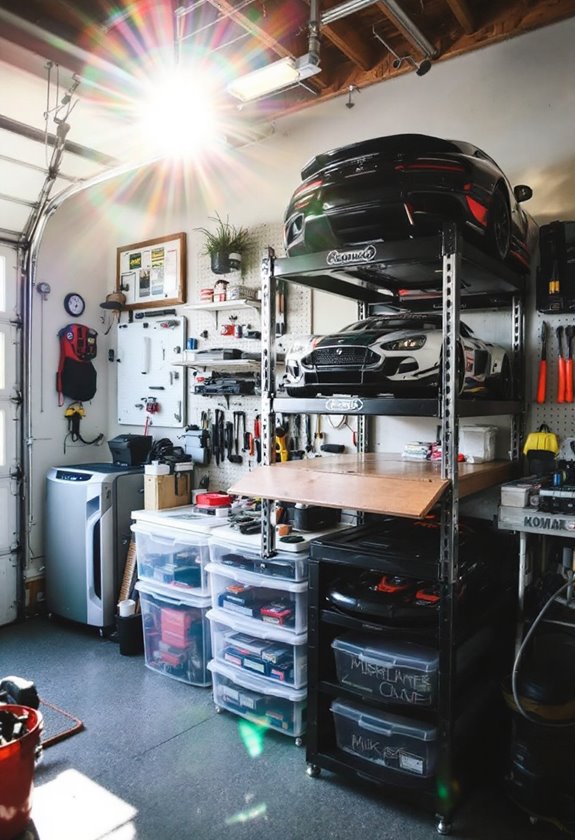
Storing our RC cars properly goes beyond just battery safety; it includes ensuring that the storage areas are well-ventilated. Adequate airflow patterns are vital for humidity control, preventing moisture buildup that can lead to rust and corrosion on our cars’ metal components. A dry environment protects our electronics and prevents plastic degradation.
Moreover, ventilation regulates temperature, preserving battery life and reducing wear on solder joints. By promoting air circulation, we can also disperse harmful gas fumes from batteries. Utilizing fans and keeping windows open—when safe—enhances airflow and minimizes risks like mold and mildew. Ultimately, well-ventilated storage spaces are essential for maintaining the longevity and functionality of our beloved RC cars. Furthermore, upgrading components can also improve performance and ensure that the vehicles remain in top condition. Let’s create an ideal environment for our collection!
Organizing Your RC Car Collection

Getting our RC car collection organized can greatly enhance our enjoyment and make maintenance much simpler. To kick off our RC car organization, we should categorize our cars by type—buggies, trucks, or crawlers—making retrieval easier. Sorting them by size can prevent damage, while organizing by brand helps us track parts compatibility. Using labeled containers visually distinguishes categories and keeps our collection inventory in check. Having clear labels on all storage, with details like model and condition, enhances accessibility. We can also use a color-coding system for quick identification. Finally, let’s dedicate separate containers for accessories and tools to prevent clutter, ensuring everything has its place. With organization, we’ll maximize our space and enjoy our hobby even more! Additionally, considering terrain compatibility when storing our cars can help us choose the best models for specific surfaces during future outings.
Recommended Products

Helps Keep Your Space Safe - Our classic flammable liquid storage cabinet is essential for the proper storage and handling of flammable liquids, and for adherence to relevant safety standards

Main compartment presents utility boxes at a 15-degree angle for ease of access

Universal Rc Bag: The bag is designed for transporting and storing 1/14, 1/16 and 1/18 cars, truck, buggy, or hauler; Inner fixed fastener strap can secures your car to prevent damage during transportation (patented design)
Cleaning Your RC Car Before Storage
Cleaning your RC car before storage is essential for maintaining its performance and longevity, and it only takes a few simple steps. First, let’s use some effective cleaning techniques. We should start by removing loose dirt and debris with a soft brush, followed by a blast of compressed air for tight spots. Next, apply a specialized RC car cleaner, letting it sit for a few minutes before rinsing—avoiding electronics, of course. Remember to clean bearings safely by shielding them and using compressed air instead of water. Integrating a maintenance schedule helps us catch small issues early. After cleaning, we must guarantee our car is completely dry before storing it. This way, we’re preserving our prized possessions for many thrilling runs ahead! Additionally, using gentle cleaning solutions specifically designed for RC vehicles can help protect delicate components.
Battery Maintenance and Storage Tips
After we’ve confirmed our RC car is spotless and ready for storage, we can’t forget about our batteries. To guarantee battery longevity, LiPo batteries should be stored at around 3.7–3.85 volts per cell, about 50% charged. For NiMH batteries, we need to conduct periodic charging cycles to prevent memory effects.
Let’s remember to keep them in a cool, dry place, ideally between 50°F and 77°F. Regularly, we should check voltage every few months, looking for corrosion or damage. Using safe bags can protect them, too! Finally, if they don’t charge post-storage, gently warming them can help revive them. Taking these steps guarantees our RC batteries remain ready for the next adventure.
Recommended Products
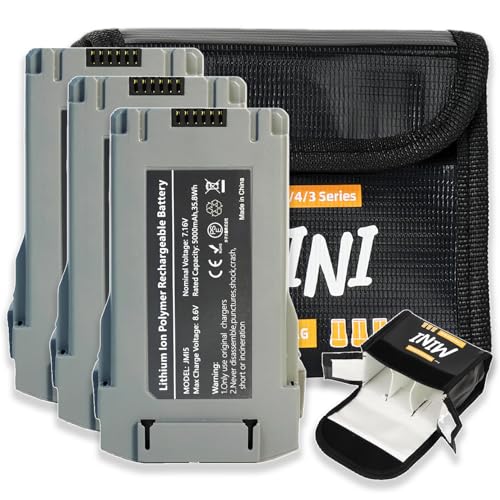
【WIDE COMPATIBILITY】: The replacement battery is compatible with DJI mini 5 pro intelligent flight drone. The 3-in-1 fireproof safe bag is fireproof, explosion-proof, scratch-resistant, heat-resistant, and radiation-proof. Allows you to safely charge for DJI Mini 5 Pro, Mini 4 Pro, Mini 3 Pro,Mini 3 Pro batteries.NOTE:This battery is not compatible with the original charger. Please try charging it while it is installed in the drone.

【Zeee 14.8V 10000mAh Lipo Specification】- Battery voltage: 14.8V; Capacity: 10000mAh; Discharge: 120C; Configuration: 4S1P; Cell voltage: 3.2~4.2V; Plug: QS8 Connector.

Perfectly compatible with DJI Phantom 3 SE, DJI Phantom 3 SE Advanced, Phantom 3 Pro, Phantom 3 Standard, Phantom 4K, and Phantom 3 Charger.
Nitro-Powered Car Fuel Management
When managing nitro-powered car fuel, it’s essential to understand the specific requirements for storage and handling. First, keep those storage containers tightly sealed to avoid moisture and contaminants entering, which can lead to fuel degradation. Unopened fuel can last for years under the right conditions, but once opened, it should ideally be used within six months.
Store fuel in a cool, dry place and well off the ground to maintain a consistent temperature. Avoid storing it in drink bottles or on concrete; both can create issues. Also, remember to regularly check for cloudiness or separation in the fuel—it’s a sign it’s time to get a fresh batch. Safety first; keep it away from children and label it clearly!
Recommended Products

Bottle is 21" long by 7" in diameter
Package quantity:1

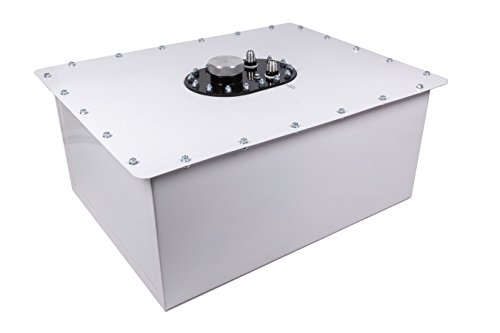
Lightweight and Durable Material: The liquid nitrogen tank is crafted from high-strength aviation-grade aluminum alloy, ensuring both portability and durability. This material effectively protects the stored liquid nitrogen and prevents scratches and deformation, ensuring safety and reliability during use.
Tire and Wheel Care During Storage
Proper tire and wheel care during storage can greatly extend the life of our RC vehicles. First, let’s store our tires in a cool, dark environment, ideally around 5°C (41°F), to keep them flexible and fresh. Airtight storage containers or specialized tire bags are excellent for locking out oxygen and preventing damage. Before we pack them away, let’s thoroughly clean the tires and wheels to avoid deterioration caused by dirt and oils. Remember, while tire conditioning can help rejuvenate hardened rubber, it should be used sparingly. Avoid stacking tires under heavy loads to prevent deformation. By following these simple but effective steps, we can guarantee our tires are ready for action when we are!
Recommended Products

Complete Kit To Quickly & Efficiently Replace A Blown Or Flat Tire.

Kit includes front bumper made to protect the front of your machine and your headlights and the side of your machine

ADVENTURE-READY CAR ROOF CARGO CARRIER : The Mockins Car Rooftop Cargo Carrier combines a sleek profile with a solid 250 lbs. load capacity. Engineered as a spacious car roof rack basket , the oversized 90"×50"×6" frame holds luggage, camping gear, sporting equipment & much more. Measuring 7.5 feet in length, this massive car top carrier suits SUVs, hatchbacks, RVs & larger vehicles. Its universal roof rack design fits round & square crossbars to serve as a versatile roof basket cargo carrier .
Utilizing Effective Storage Solutions
Finding effective storage solutions for our RC cars and accessories is vital to guarantee their longevity and performance. We can explore various storage innovations like sturdy plastic bins. These stackable options help us maximize vertical space and their transparent nature makes quick identification easy. Custom solutions such as adjustable shelving units allow us to accommodate cars of different sizes, while wall-mounted pegboards keep our accessories organized. For transport, specialized hard cases provide robust protection, and soft bags serve well for lighter models. Battery management is essential too; using fireproof containers for LiPo batteries minimizes risks. Overall, best organization helps us enjoy our hobby and keep everything in its rightful place for many races to come!
Recommended Products

120 Pack - Outer Dimensions: 11.75 x 15.75 x 8.25" - Inner Dimensions: 10 x 14 x 8" (0.65 Cubic Feet / 4.85 Gallons)

CUSTOMIZEABLE - Chose from various AkroBins or Akro-Mils Steel Cabinets storage drawers (sold separately) to create a standing storage rack; place in the room or against the wall, add desired bins and/or cabinets and start enjoying this space saving rack organizer

54 Pack - Outer Dimensions: 20" x 15" x 12-1/2" | Inner Dimensions: 17-1/2" x 13-5/8" x 12-1/4"
Protecting Your RC Cars From Damage
To keep our RC cars in top condition, protecting them from damage is just as important as selecting the right storage solutions. First, we should clean our cars thoroughly using mild cleaners, avoiding moisture buildup to prevent rust. After cleaning, make sure to dry every nook and cranny to prevent mold. Next, for the maintenance of moving parts, lubricate or replace shock oil, checking parts for wear. Protecting delicate components—like gears—is essential, so consider using protective gear, like foam inserts in storage containers. It’s also wise to remove batteries to prevent leaks. Storing in a stable environment, ideally between 50°F and 77°F, can safeguard our cars from long-term damage, ensuring we minimize the need for spare parts in the future.
Keeping Track of Small Parts and Accessories
When we plunge into the world of RC cars, keeping track of small parts and accessories can feel overwhelming, especially as they often come in various shapes and sizes. To simplify part identification, we recommend using clear containers for quick visibility. Divided storage bins work wonders for separating components like screws and bearings. Labeling each container with part names accelerates access and organization.
Multi-compartment drawer organizers can help us manage differing sizes of parts while foam inserts prevent shifting. For on-the-go repairs, portable toolkits with essential spare parts guarantee we’re never caught off guard. Finally, maintaining a digital inventory streamlines tracking quantities and locations. It’s all about achieving storage simplicity while fostering a sense of community in our RC adventures.
Regular Maintenance Checks While in Storage
Keeping your RC car in top shape during storage is crucial, especially if we want it to be ready for our next adventure. Regular maintenance checks can make a huge difference! Let’s focus on preventive maintenance and storage inspections. First, we should inspect key components like the suspension and electronics for any signs of wear or damage. It’s important to clean each part thoroughly after use and make sure everything is dry to avoid rust. Next, we’ll check lubricant levels; using silicone for plastic parts and oil-based for metal guarantees peak performance. Finally, we should schedule periodic inspections every few months, looking for corrosion or battery condition. By staying proactive, we’ll protect our beloved RC cars and keep them ready for action!
Tips for Storing Batteries Safely
Storing batteries properly is essential for maintaining their longevity and performance, especially when we’re putting our RC cars away for an extended period. For LiPo batteries, we should aim for a charge level of 40–60%, ideally around 3.8V per cell. Conversely, NiMH batteries need to be stored almost fully charged but should be discharged to half capacity beforehand, recharging them every few months.
Let’s use suitable storage containers, like fireproof bags for LiPos, to guarantee safety. We must remember to keep our batteries cool and dry, ideally between 50°F and 77°F, avoiding humidity and extreme temperatures. Regularly checking the storage environment helps prevent damage, safeguarding our investment in RC fun while extending battery lifespan.
Best Practices for Long-Term Storage
Properly preparing our RC cars for long-term storage doesn’t just end with the batteries; attention must be given to every component. First, let’s make certain thorough cleaning using light detergents and distilled water, allowing everything to dry completely. Replacing shock oil and lubricating moving parts is key to preventing rust. For ideal storage solutions, we should store in dry, well-ventilated areas with stable temperatures, ideally between 50°F and 77°F (10°C–25°C). Covering circuit boards in dielectric grease adds extra protection. Finally, let’s keep tools and spare parts organized nearby for quick maintenance. By following these organization tips and looking after our cars, we’ll reduce wear, making sure they’re ready for the next adventure when we bring them back out.
Frequently Asked Questions
Can I Store RC Cars in a Basement or Attic?
We shouldn’t store RC cars in a basement or attic; nearly 60% of those spaces face humidity control issues and temperature extremes. Let’s keep our beloved vehicles safe in a dry, climate-controlled space together!
How Often Should I Check on My Stored RC Cars?
We should check our stored RC cars every 3 to 4 months, maintaining a consistent maintenance schedule. Prioritizing a proper storage environment helps guarantee our cars stay in top shape for whenever we’re ready to race!
What Is the Best Way to Label Storage Bins?
The best way to label storage bins is by using color coding with durable label materials. This approach not only enhances organization but also brings us together, making our shared space efficient and visually appealing.
Should I Disassemble My RC Car for Long-Term Storage?
We should definitely consider disassembling our RC cars for long-term storage. The disassembly benefits, like preventing wear and facilitating cleaning, outweigh storage considerations. Together, we can guarantee our beloved vehicles remain in top shape for future adventures!
Can I Store Multiple RC Cars in One Box?
Yes, we can store multiple RC cars in one box by focusing on space management and ensuring car protection. By organizing them thoughtfully, we’ll keep our collection safe and accessible, making it easier to enjoy together.